To see all the links for the ‘How To’ posts for the “Imagine” Banner Weave along, please go to L I N K S
To order the loom, book and extras kit for the Weave Along from Mirrix, please go to K I T
HOW TO WEAVETHE TRIANGLES:
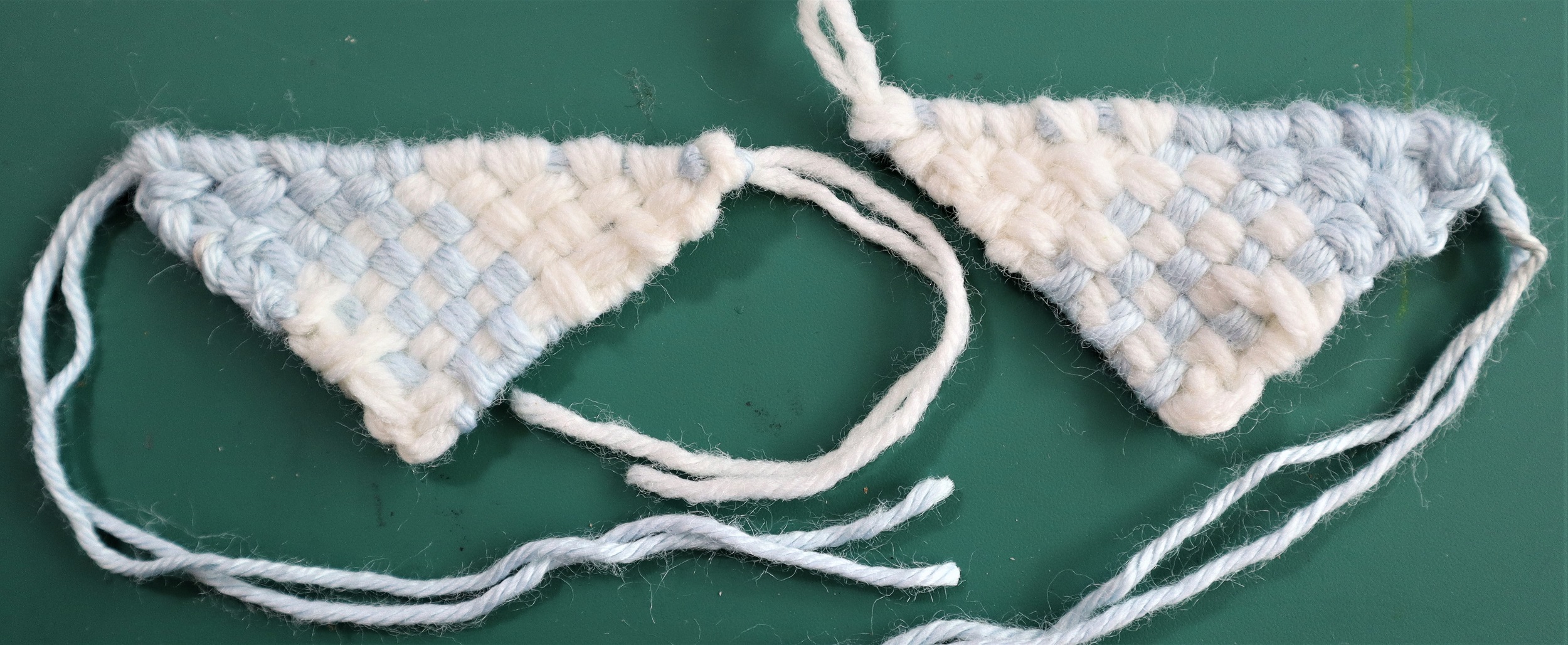
Make 2.
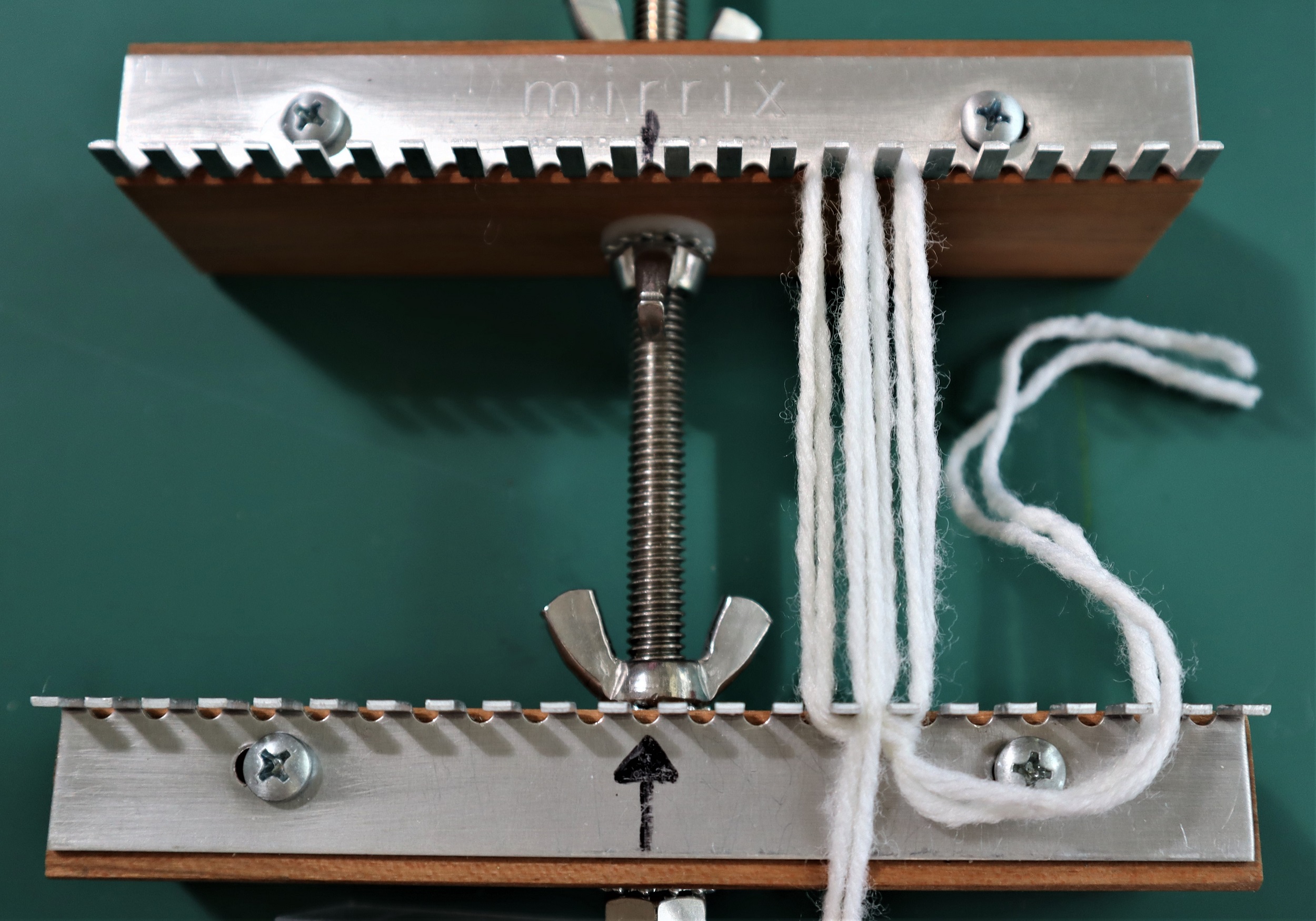
1: SET UP THE LOOM so it is 2 1/2 inches (approximately 6.25 cm) from the lower set of pegs to the upper set. Lock it into the ‘Sandy Stand’.
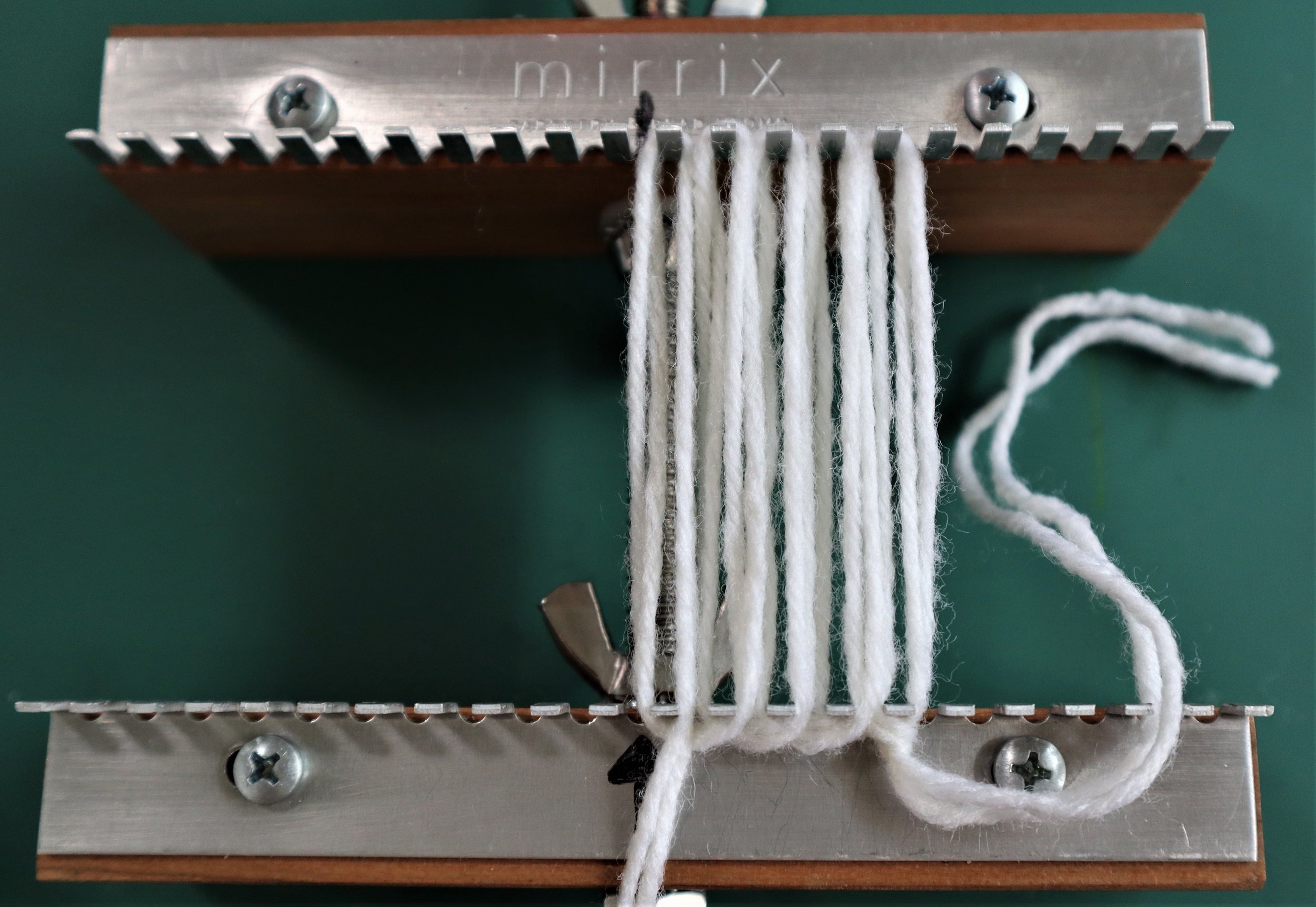
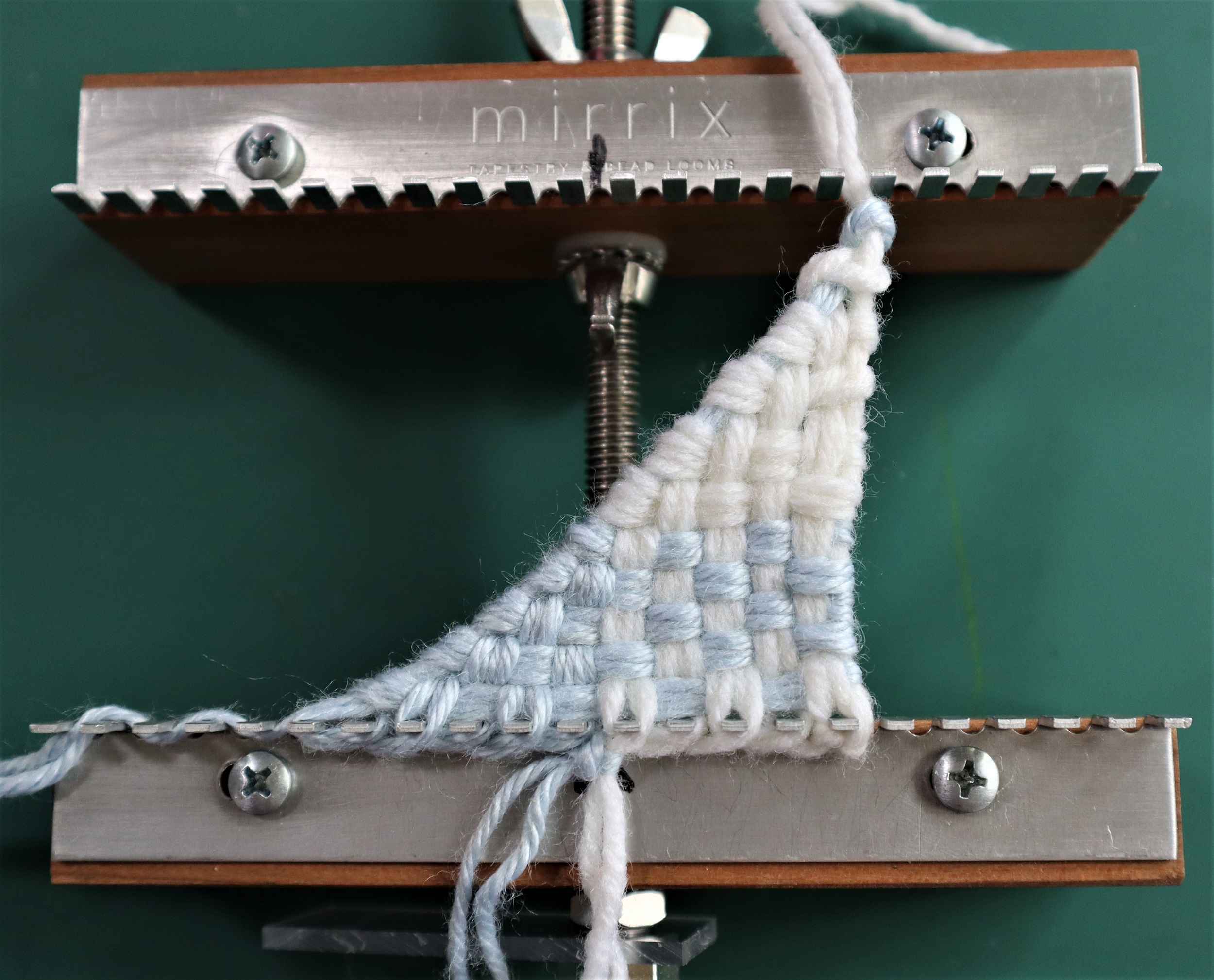
2: WARP THE LOOM: Following the instructions for warping the Triangle on page 82 of ‘Innovative Weaving on the Frame Loom’, leave 6 sets of pegs at both sides open so just the center 10 pegs are used: Begin at the right hand side.
With 2 strands of white yarn held together as if it is one strand, and 2 strands of pale blue yarn as if it is a single strand, put on 5 loops of white warp strands and then, 5 loops of blue yarn. Cut and tie a knot in the middle.
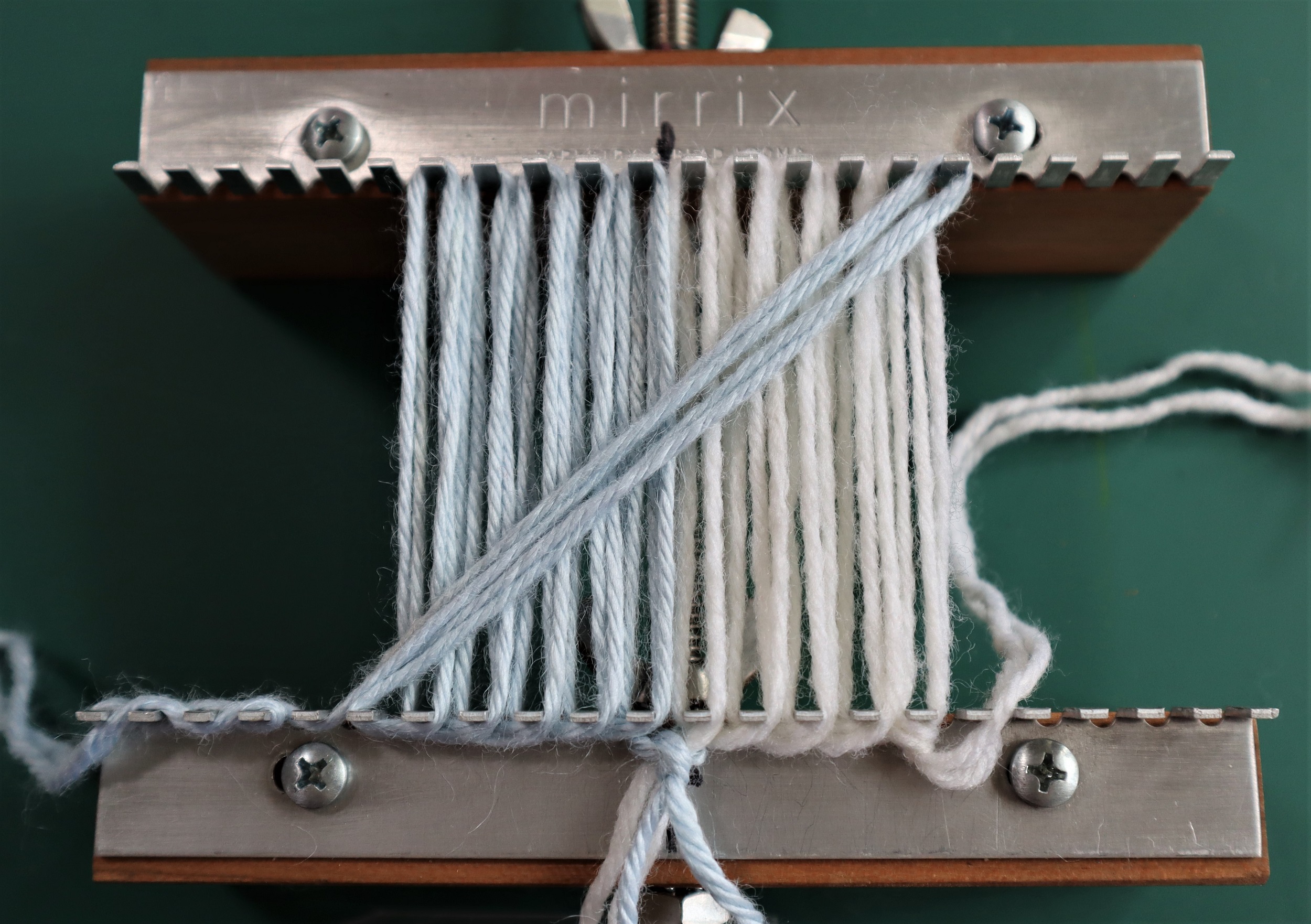
Diagonal:
Take the blue yarn around the lower left hand peg beside the warp strands up to and around the peg that is adjacent to the warp strands at the top right hand peg
Weave the end of the blue yarn around the lower left hand pegs, back and forth to secure it, then snip the end off.
3: WEAVE:
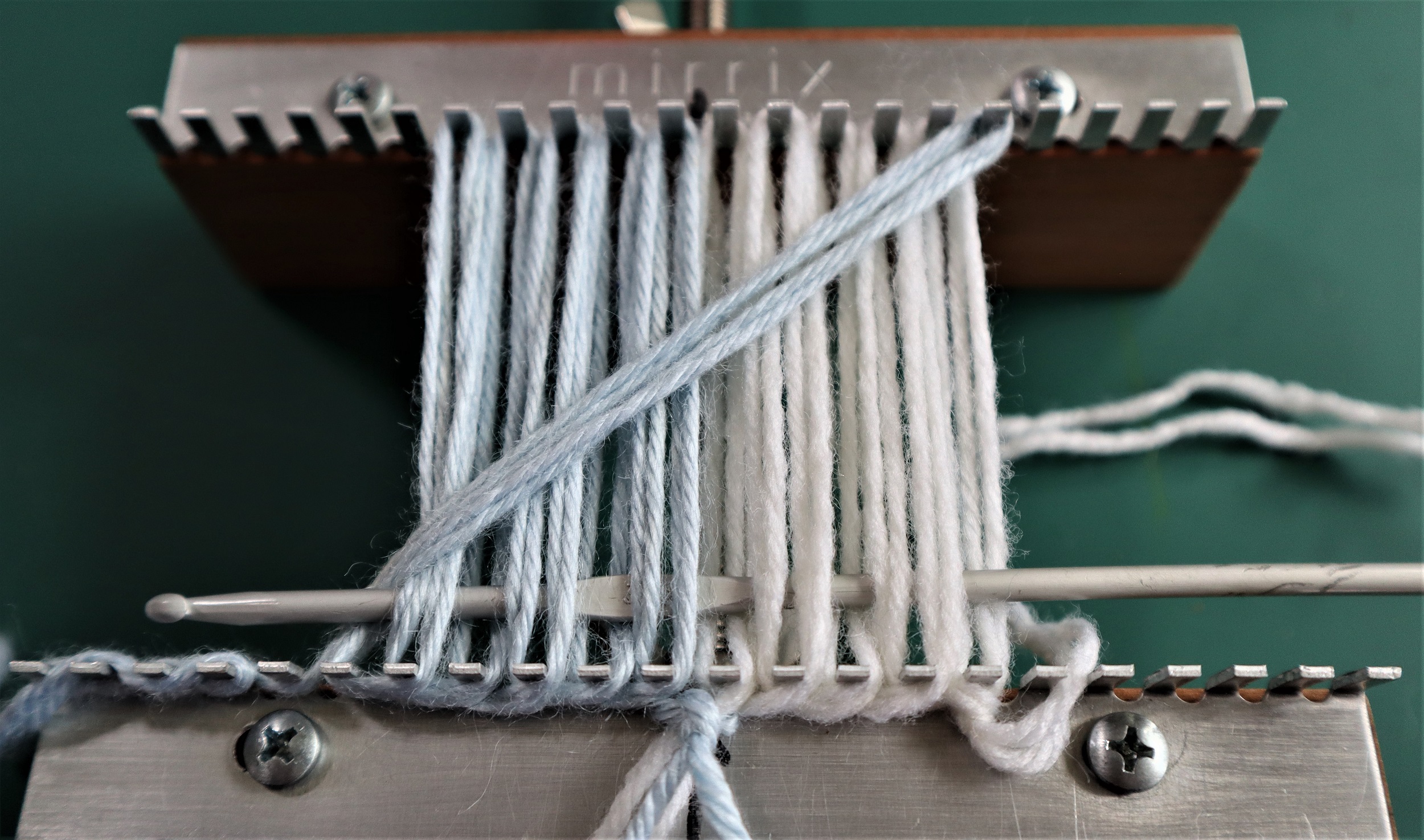
Follow the instructions in the book to weave the triangle, using a crochet hook. Repeat for the second triangle.
4: FINISHING THE TRIANGLES:
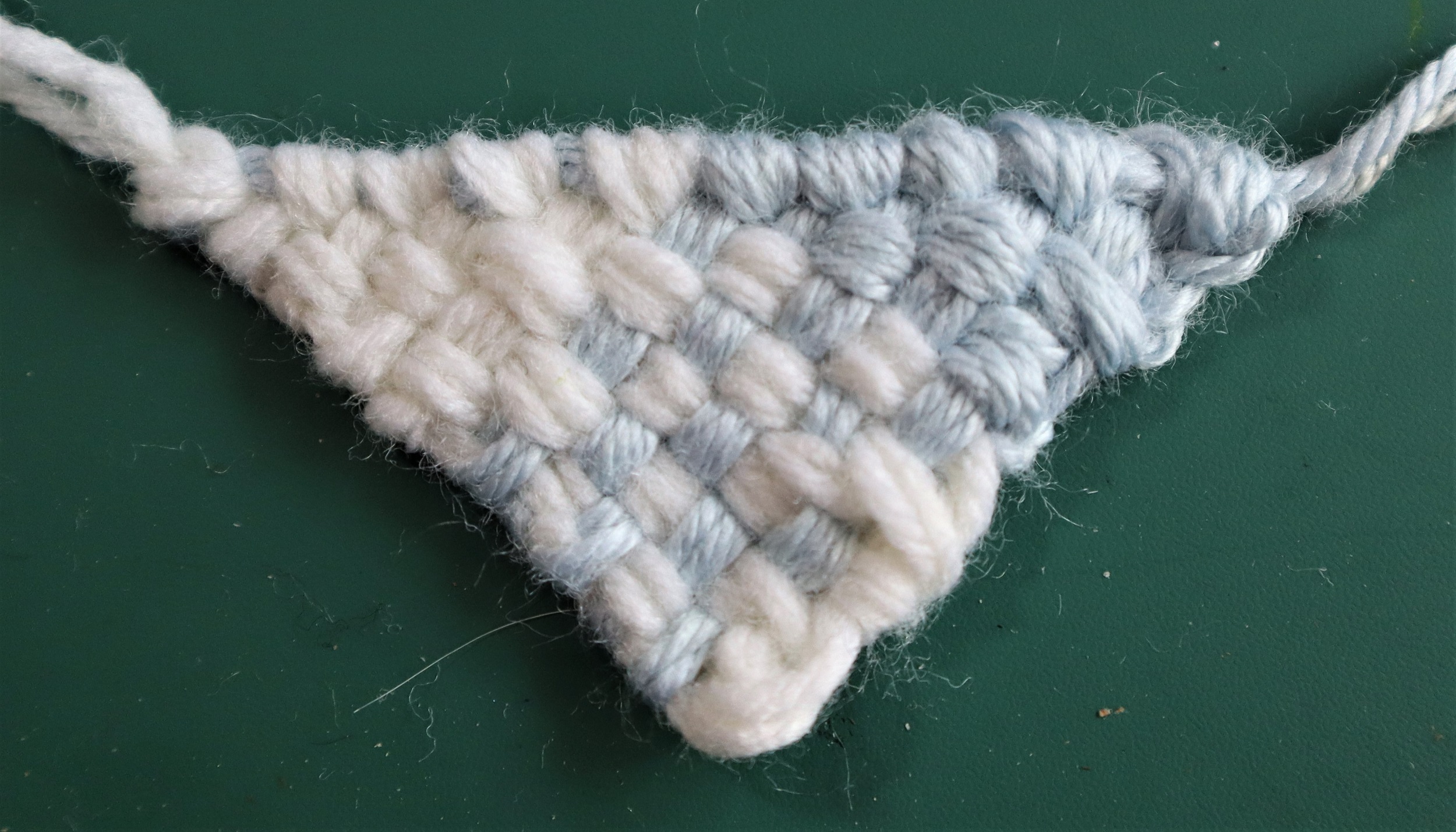
If necessary, pull up on the diagonal yarn end to pull the triangle into shape.
Steam the triangles on the wrong side with a steam iron, being sure to not touch the iron to the weaving.
Finger press the triangles to shape them into pleasing triangles.
To see all the links for the ‘How To’ posts for the “Imagine” Banner Weave along, please go to L I N K S
To order the loom, book and extras kit for the Weave Along from Mirrix, please go to K I T
HOW TO EMBROIDER
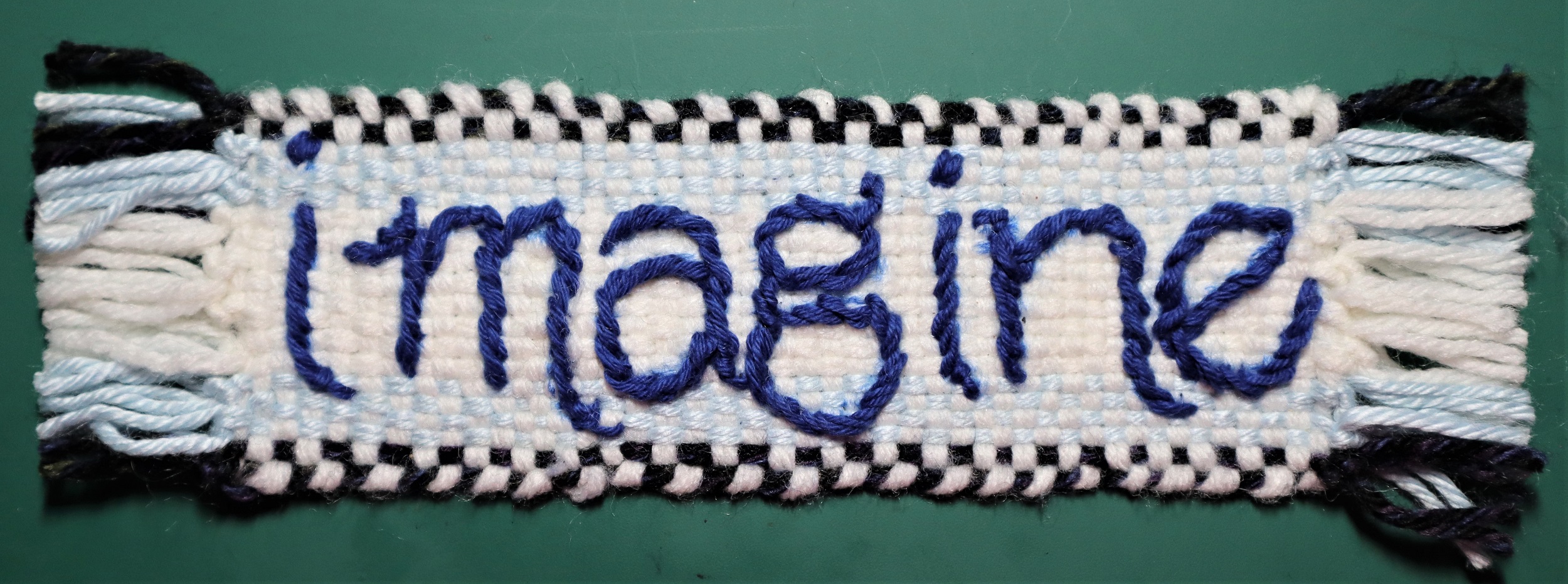
THE WORD ‘IMAGINE’ ON THE NARROW BAND:
NOTE: The embroidery is done while the weaving is still on the loom and under tension.
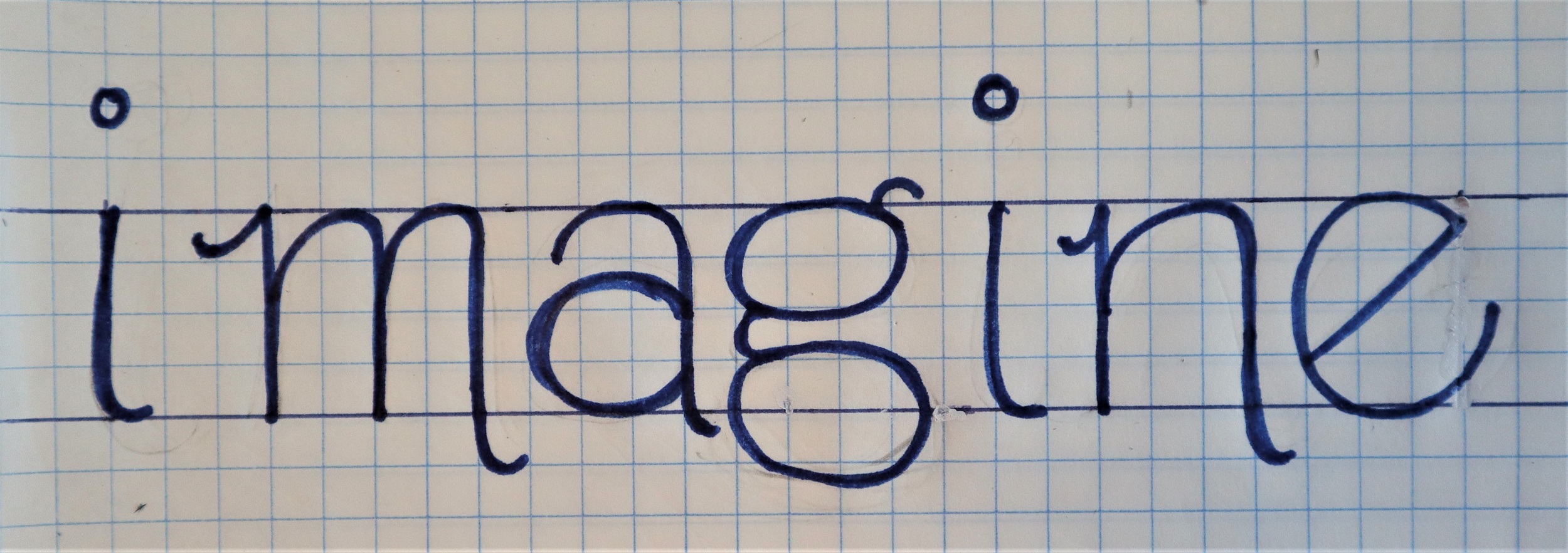
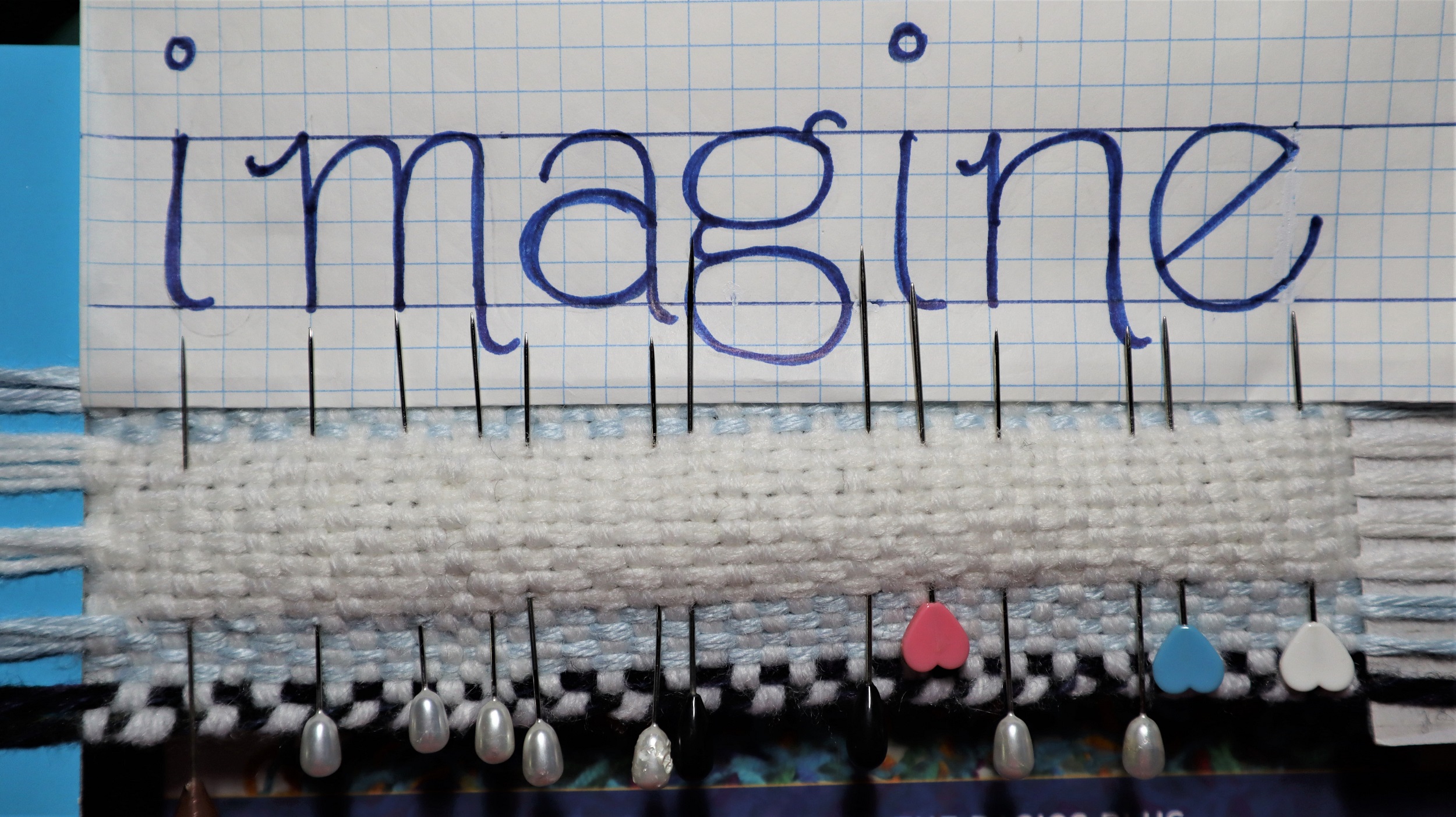
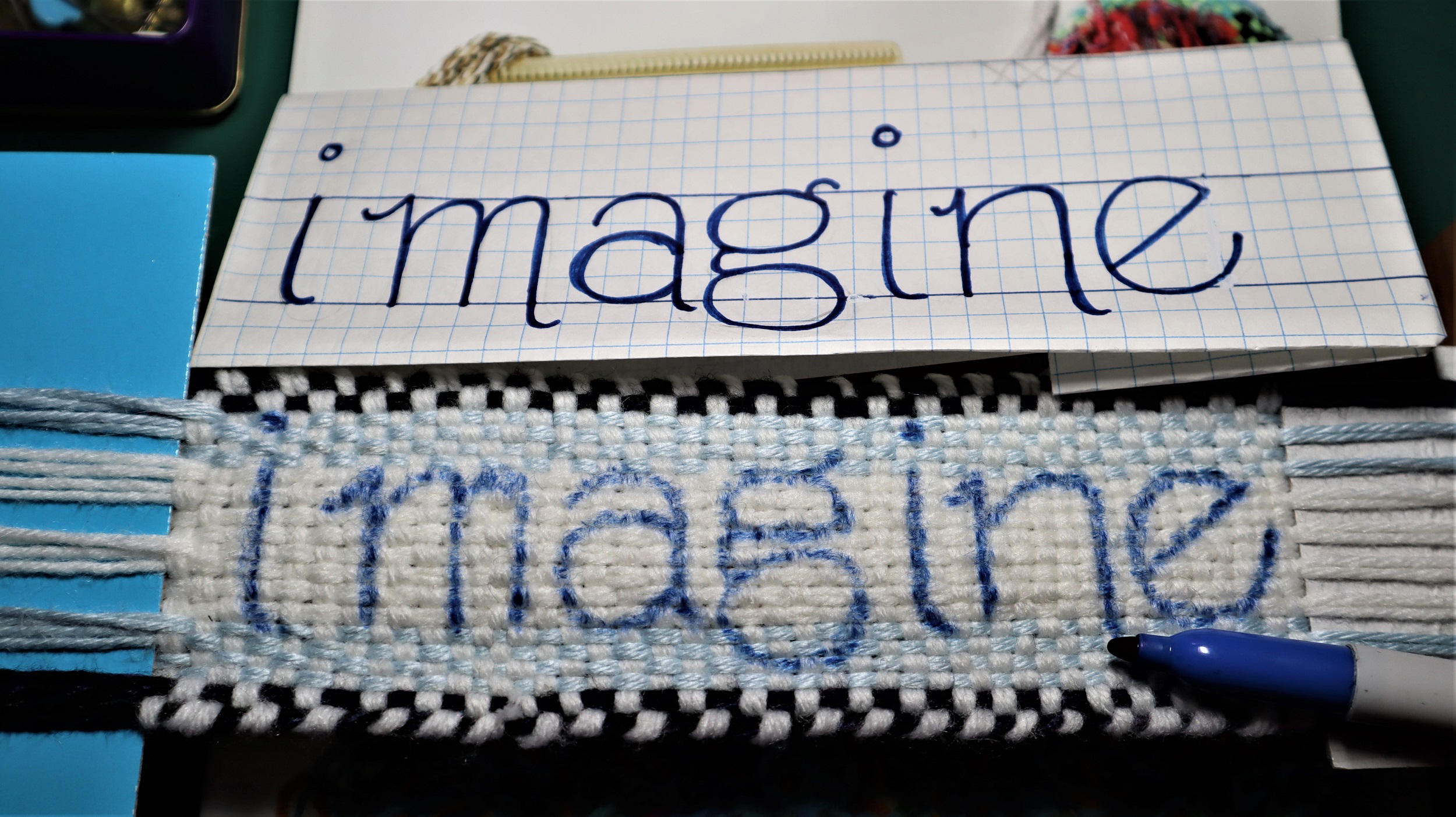
1: Print out a copy of the ‘Imagine’ letters so they are approximately 1 inch/2.5 cm high by 7 in/17.5 cm or use 1/4 inch graph paper to draw them out.
2: Fold the paper so the edge of the letters can be placed right against the 1 inch/2.5 cm high white center section of the weaving.
3: Place the straight pins at the upright lines of the letters, ‘I’, ‘m’, ‘n’, and at the outside edges of the chubby ‘a’, ‘g’ and ‘e’.
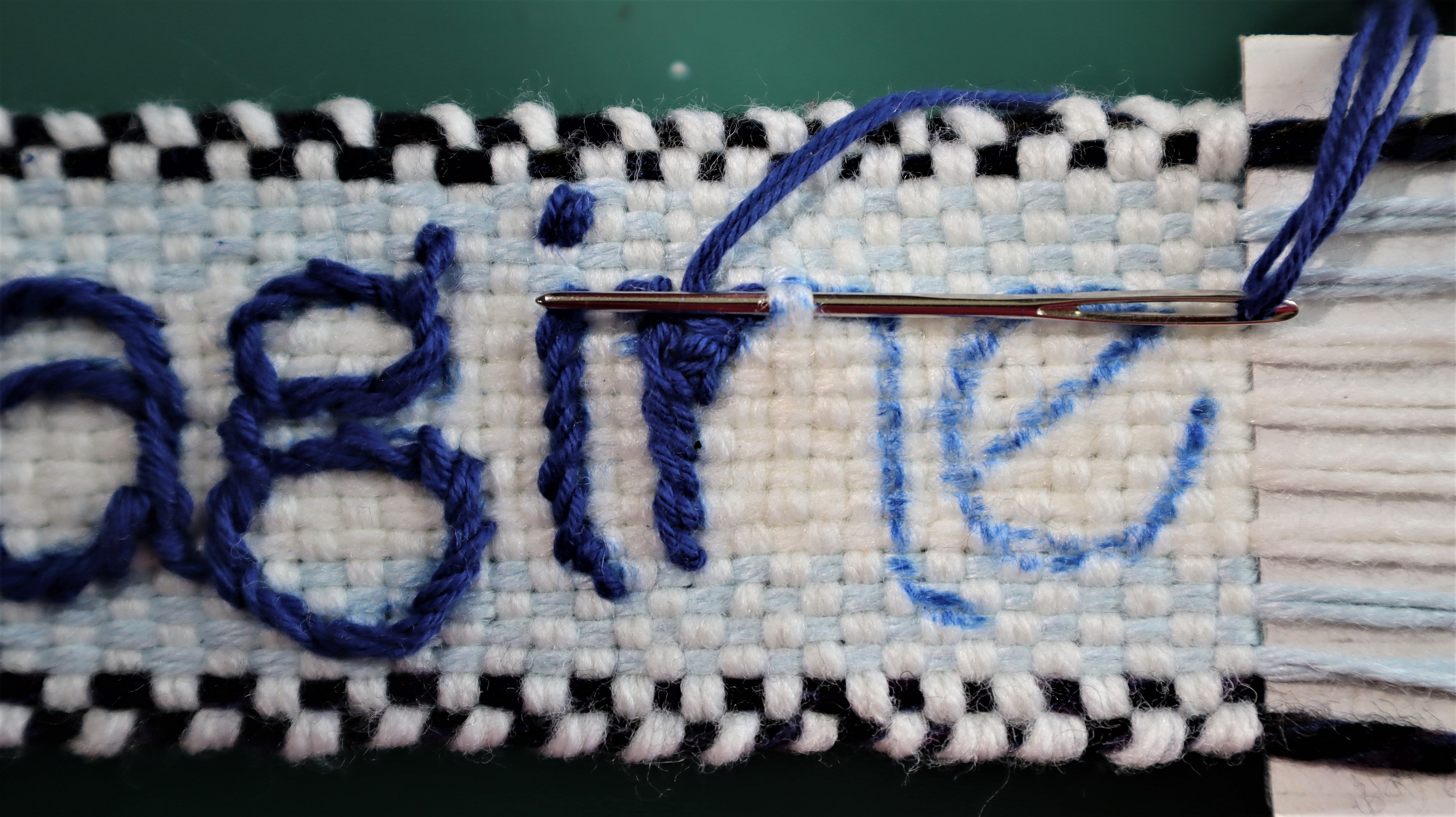
4: Use the pins as guides to draw the letters onto the narrow band using a permanent felt tip marker.
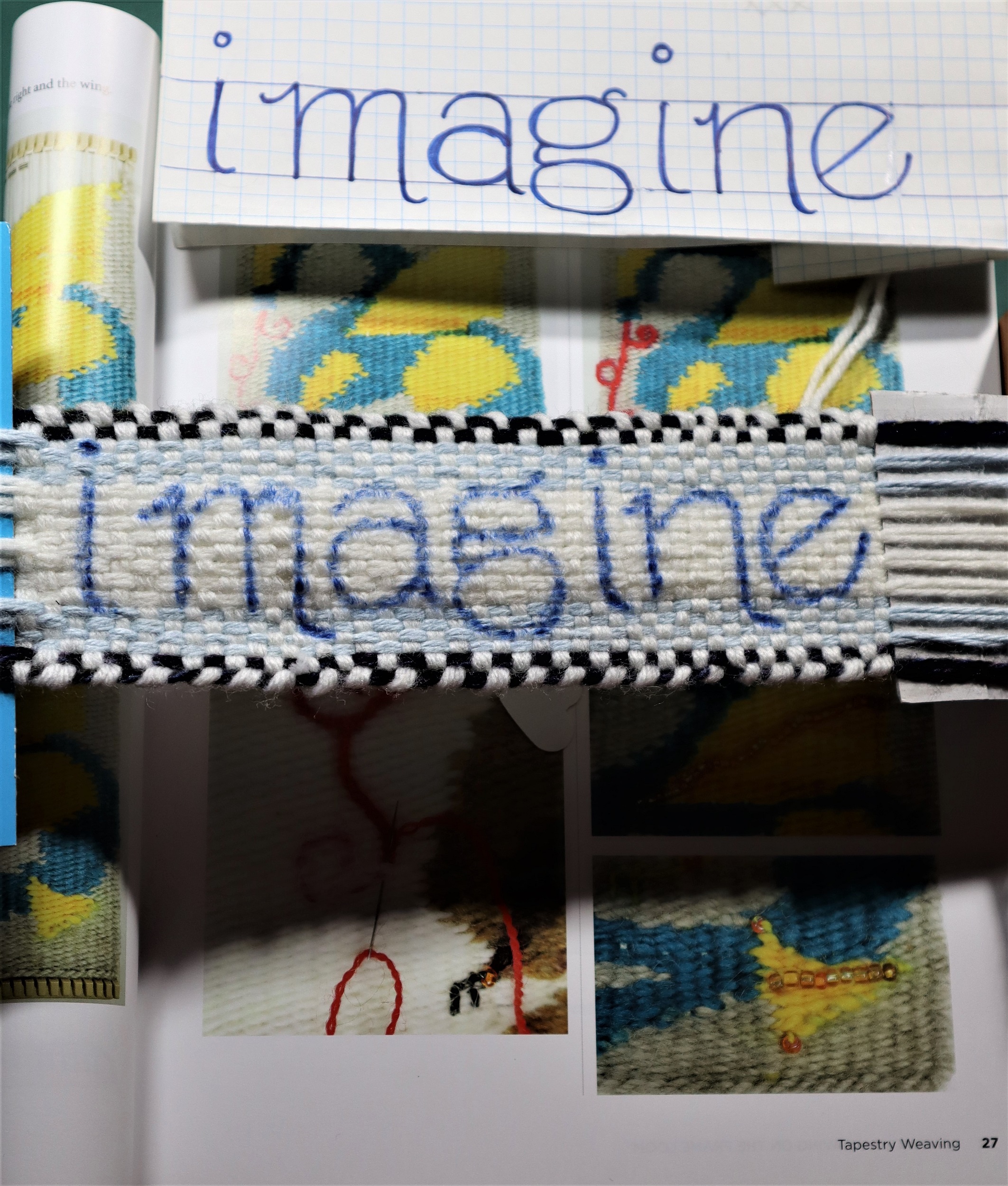
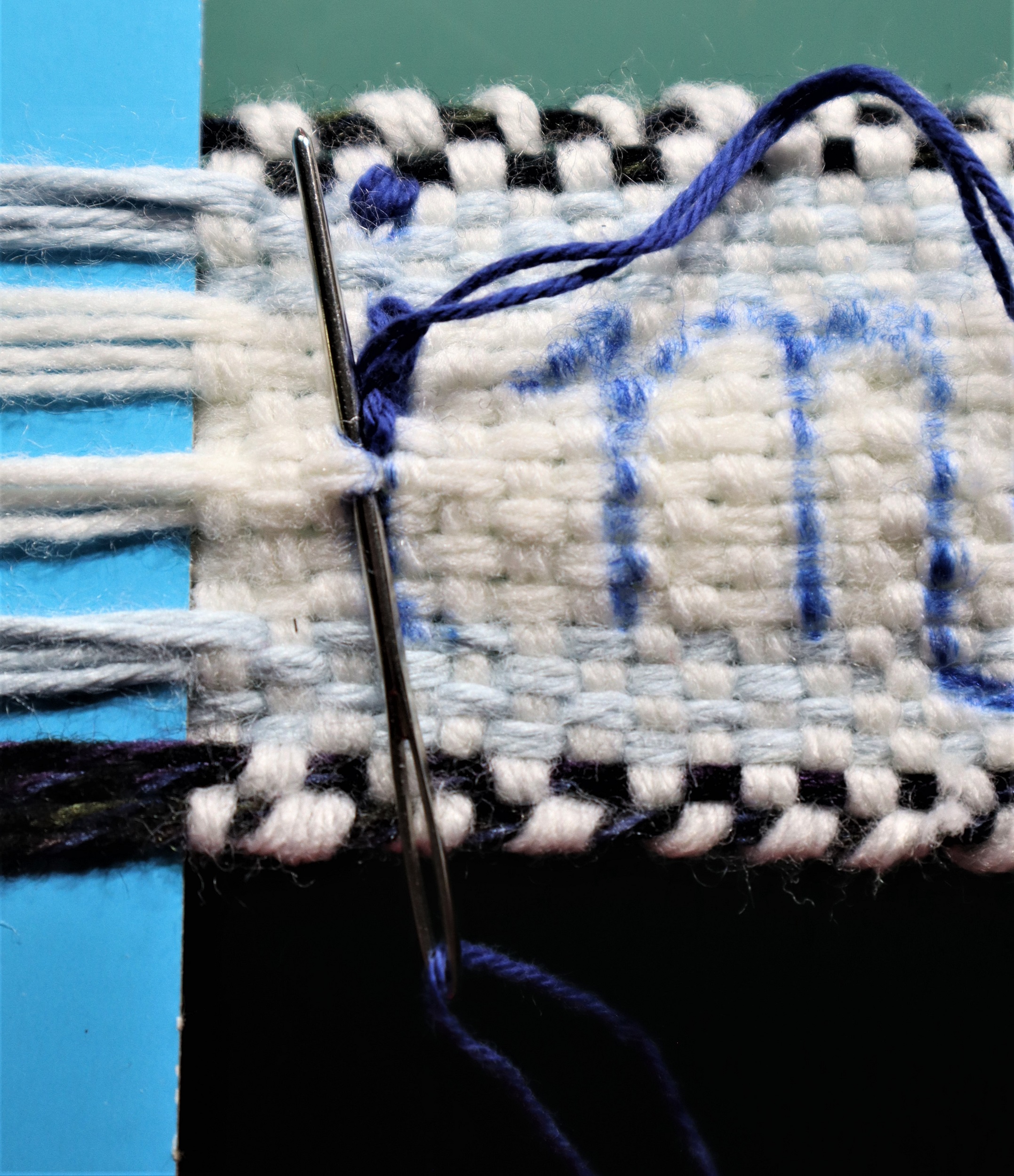
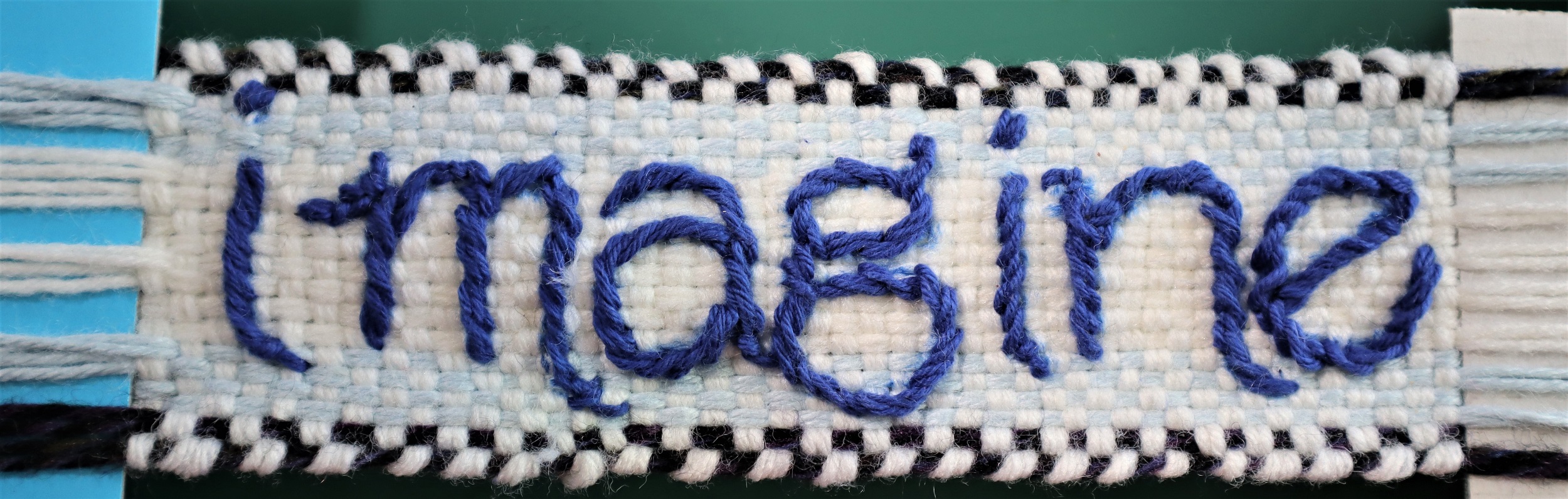
5: Following the instructions on page 27 of “Innovative Weaving on the Frame Loom”, embroider the letters with dark blue embroidery floss.
The photo on the lower left of page 27 shows how the running stitch is done.
FRINGE:
6: Lift the weaving off the loom and remove the 2 pieces of cardboard.
7: Cut the ends of the loops at the right hand side of the narrow band (it was at the top of the loom) open.
8: Trim the ends that were at the lower edge of the loom, now the left hand side of the band, to the same length as the warp ends at the other end of the narrow band.
9: Tie a knot (left over right and under, right over left and under) with each set of 4 strands of yarn across both ends of the narrow band.
10: FINISHING THE NARROW BAND:
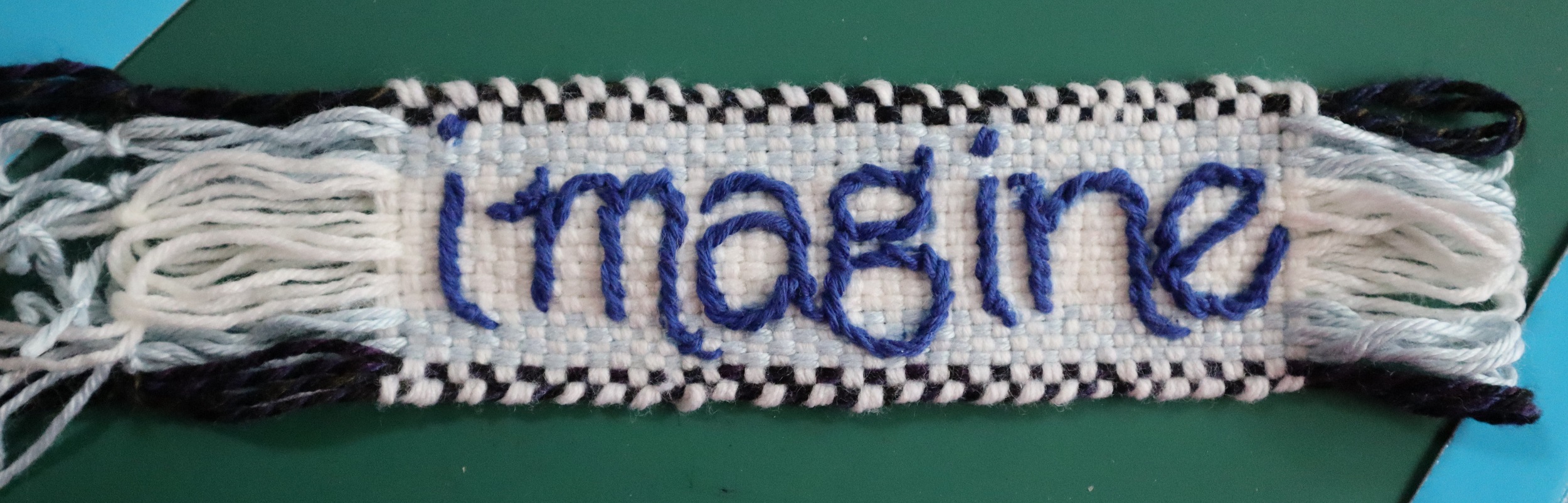
Steam the narrow band on the wrong side with a steam iron, being sure to not touch the iron to the weaving.
Finger press the narrow band to make sure that the fringes behave themselves and line up politely.
Other things that are needed for the ‘Imagine’ banner:
Yarn: Less than an ounce of each of the following colors: white, grey, black, pale blue, brown, beige
Embroidery floss: 1 skein of navy or dark blue
2 small black ‘e’ beads for the eyes and needle and thread to sew them on
Scissors
cardboard
a plastic page protector
a ruler
transparent tape
felting needles,
6 rubber bands
paper
long straight pins
permanent felt tip pen
plastic or metal ring to hang the banner
1 Weaving Needle (5 1/2 inches or 6 inches long with a blunt tip)
1 Shed Stick: a second weaving needle or 6 inch Paddle style bamboo Cocktail Skewer or a short dpn knitting needle
1 craft needle (short metal tapestry needle approximately 2 3/4 inches long)
-1 crochet hook: 4.5 mm crochet hook works just fine
PART ONE:
THE WOVEN AND EMBROIDERED NARROW BAND:
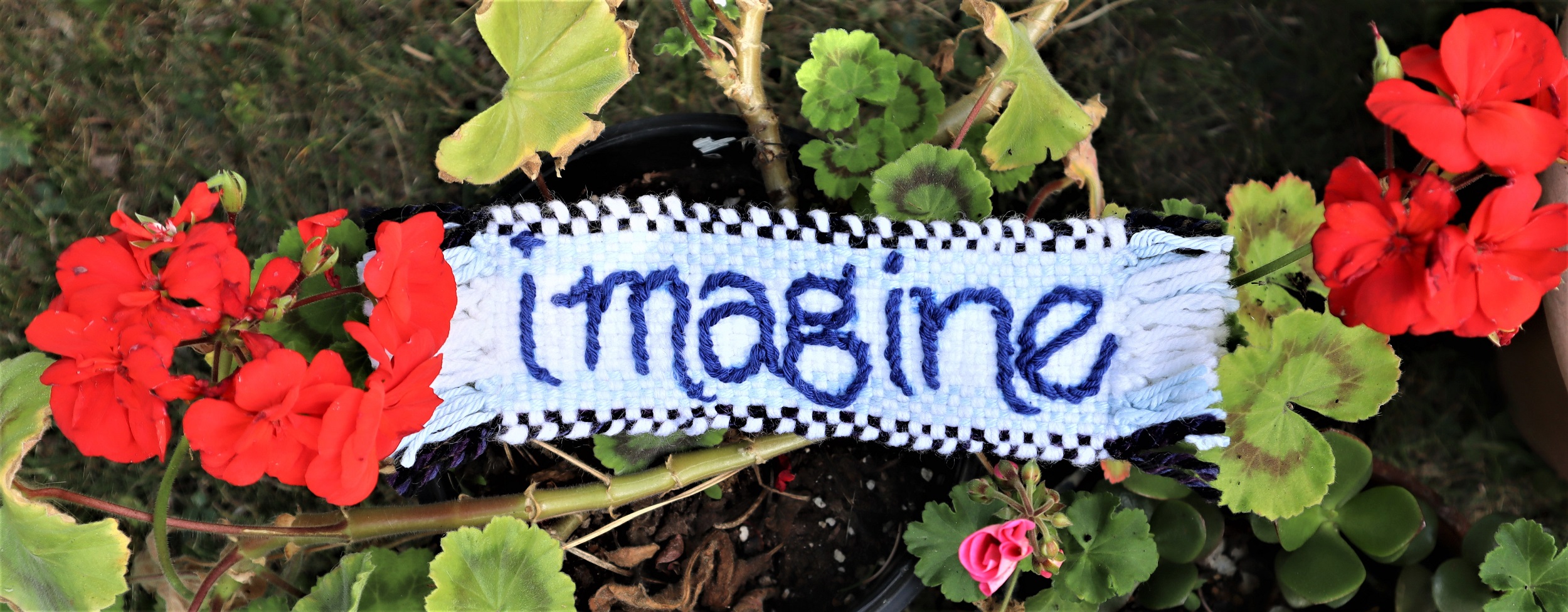
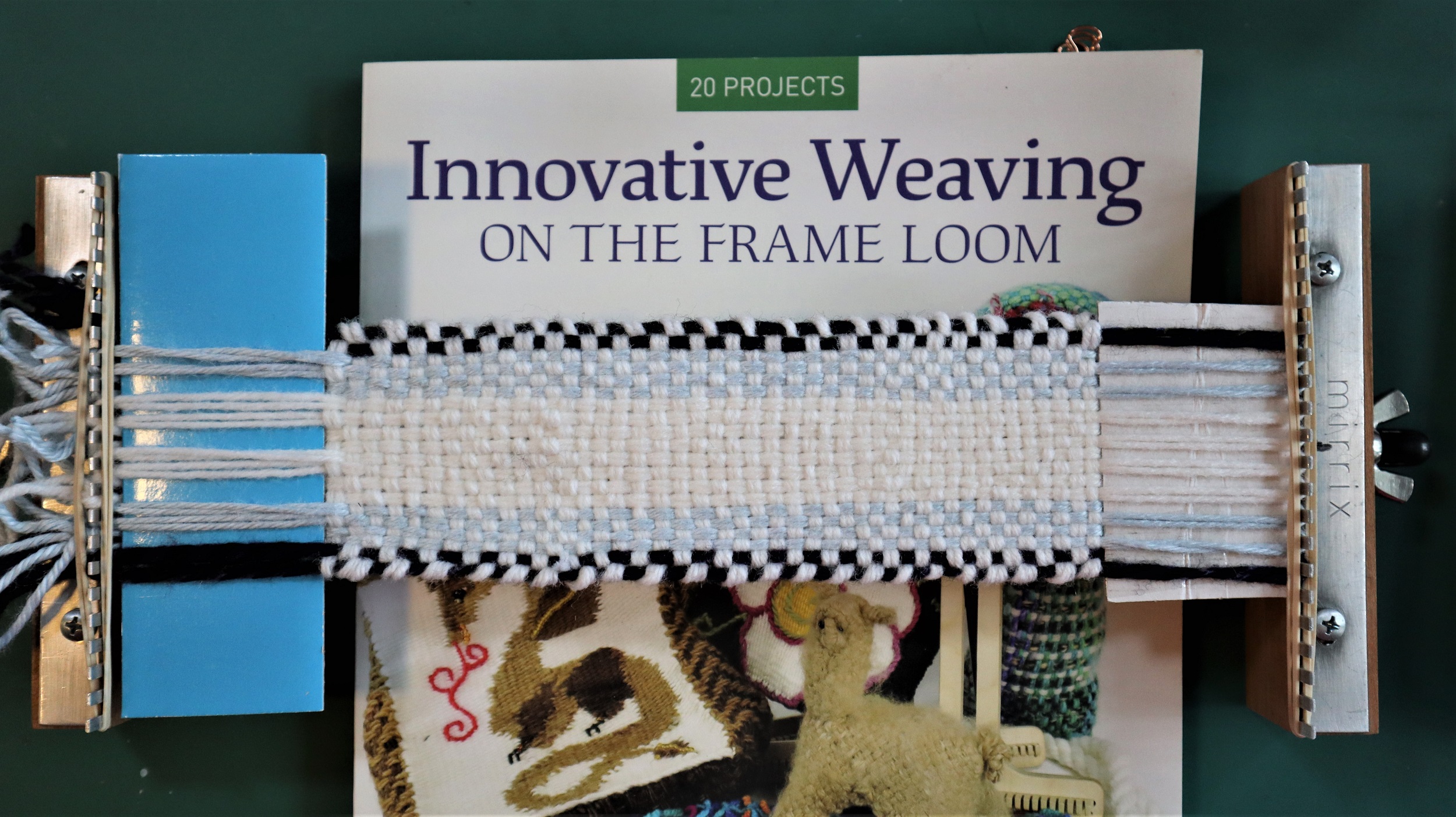
The narrow band in Albert Einstein’s hands is woven (with a couple of small modifications) following the instructions on page 171 of “Innovative Weaving on the Frame Loom” for the Alpaca Blanket. While it’s still on the loom, the word, ‘Imagine’, is embroidered using a simple running stitch.
INSTRUCTIONS:
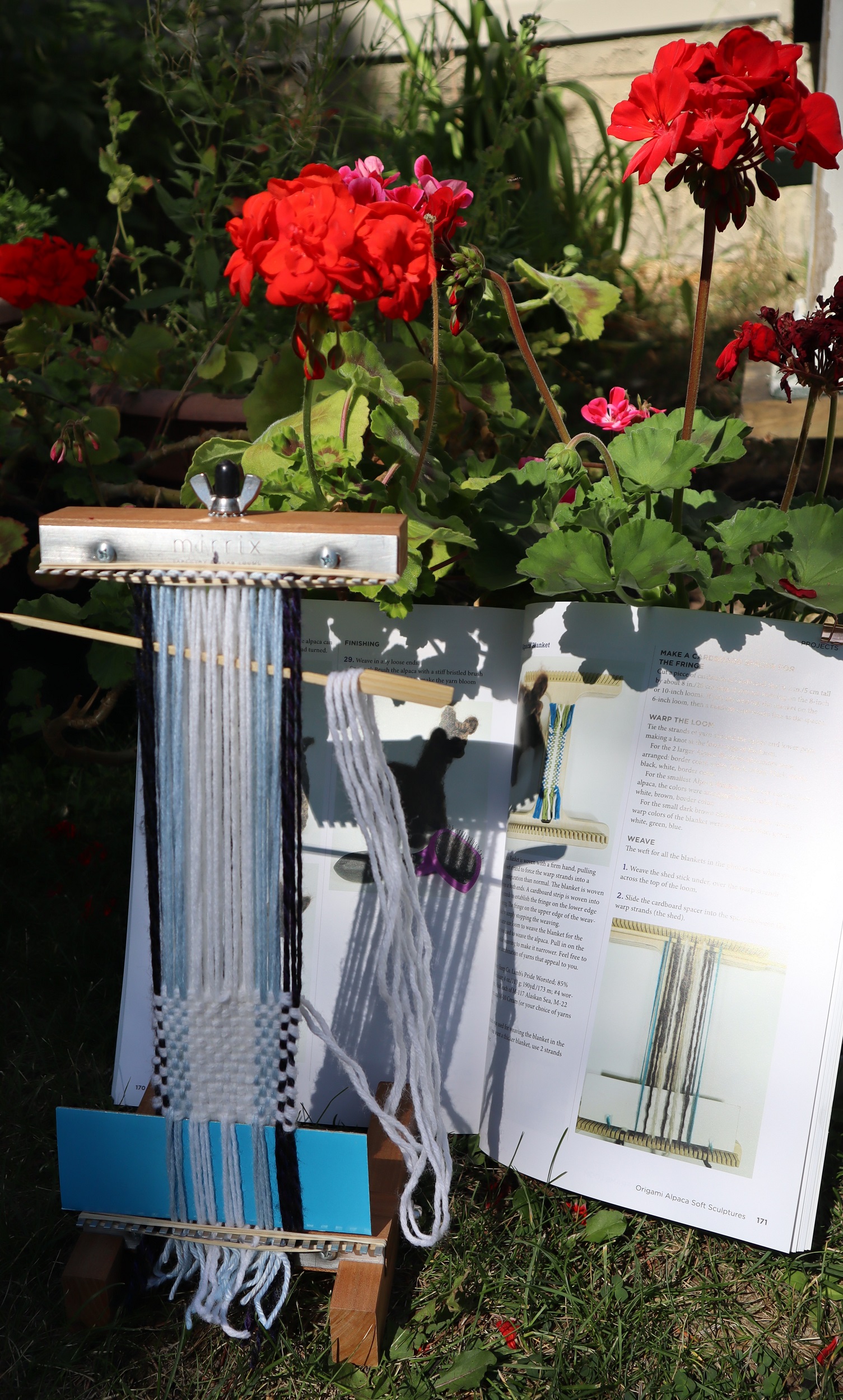
1: SET UP THE LOOM so it is 11 1/2 inches / 29 cm from the lower set of pegs to the upper set. Lock it into the ‘Sandy Stand’.
2: WARP THE LOOM: Following the instructions for the Alpaca Blanket on page 171 of ‘Innovative Weaving on the Frame Loom’, put on 10 sets of warp strands.
Use 2 strands of #4 Medium weight (Worsted or Sport weight) yarn held together as if it is a single strand.
Skip 6 pegs at each side of the loom and warp the following colors, or your choice of colors:
NOTE: A ‘set’ of warp strands in this case means tying around one peg from bottom to top of loom and snipping it after tying the knot at the lower edge. The 2 strands of warp yarn are held together while warping the loom.
1 set of warp strands Black
2 sets Light Blue
4 sets White
2 sets Light Blue
1 set Black
3: Slide 3 rubber bands over the lower set of pegs and 3 rubber bands over the upper set of pegs to help keep the warp strands from jumping off.
4: Cut 2 pieces of cardboard that are 2 inches/5 cm tall. The piece that will go into the lower edge of the warp strands should be 5 1/2 or 6 inches/15 cm wide. The piece that will go into the upper edge of the weaving once it’s done can be just 3 inches/7.5 cm wide.
5: Weave the shed stick under 2/over 2 across the warp strands at the top of the loom.
6: Weave the longer piece of cardboard into the warp strands – slide it into the shed formed by the shed stick and push it down to the lower edge of the loom. This will make the warp fringe at the first end.
7: WEAVING:
NOTE: The instructions in the book say to pull in on the weft strands while weaving. When using the Saffron loom, that is not necessary.
With 2 strands of white yarn and a weaving needle, following the instructions in the book, weave until the weaving is 7 1/2 inches/ 19 cm tall.
Fold the shorter piece of cardboard in half lengthwise and weave it into the warp strands, then open it up. This will keep the weaving taut while you embroider the word, ‘imagine’.
The 2 pieces of cardboard – 1 at each end of the weaving are essential to keep the weaving in place while embroidering the letters.
Woven on the Mirrix Saffron loom, using techniques from “Innovative Weaving on the Frame Loom”
A Weave Along by Noreen Crone-Findlay
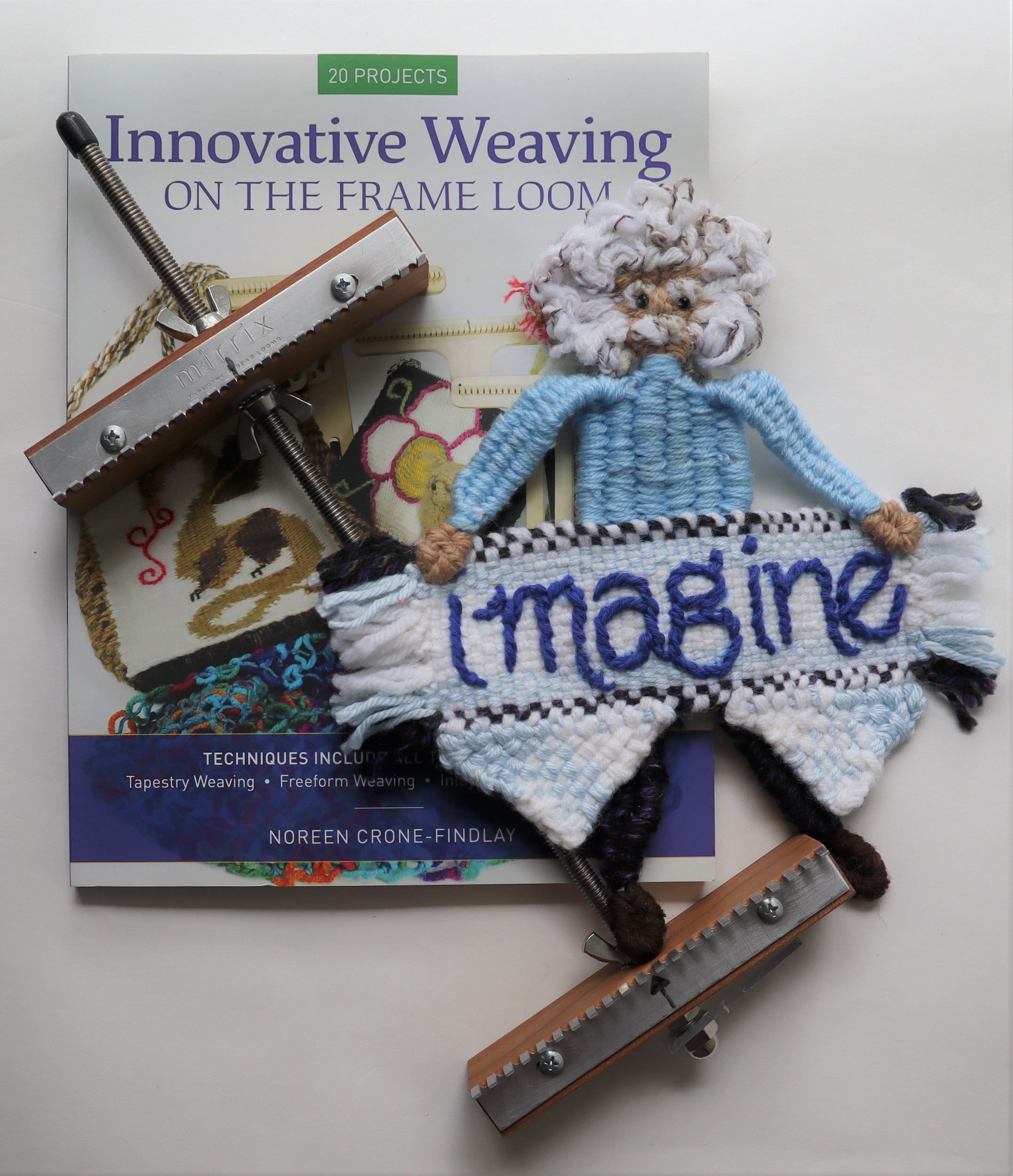
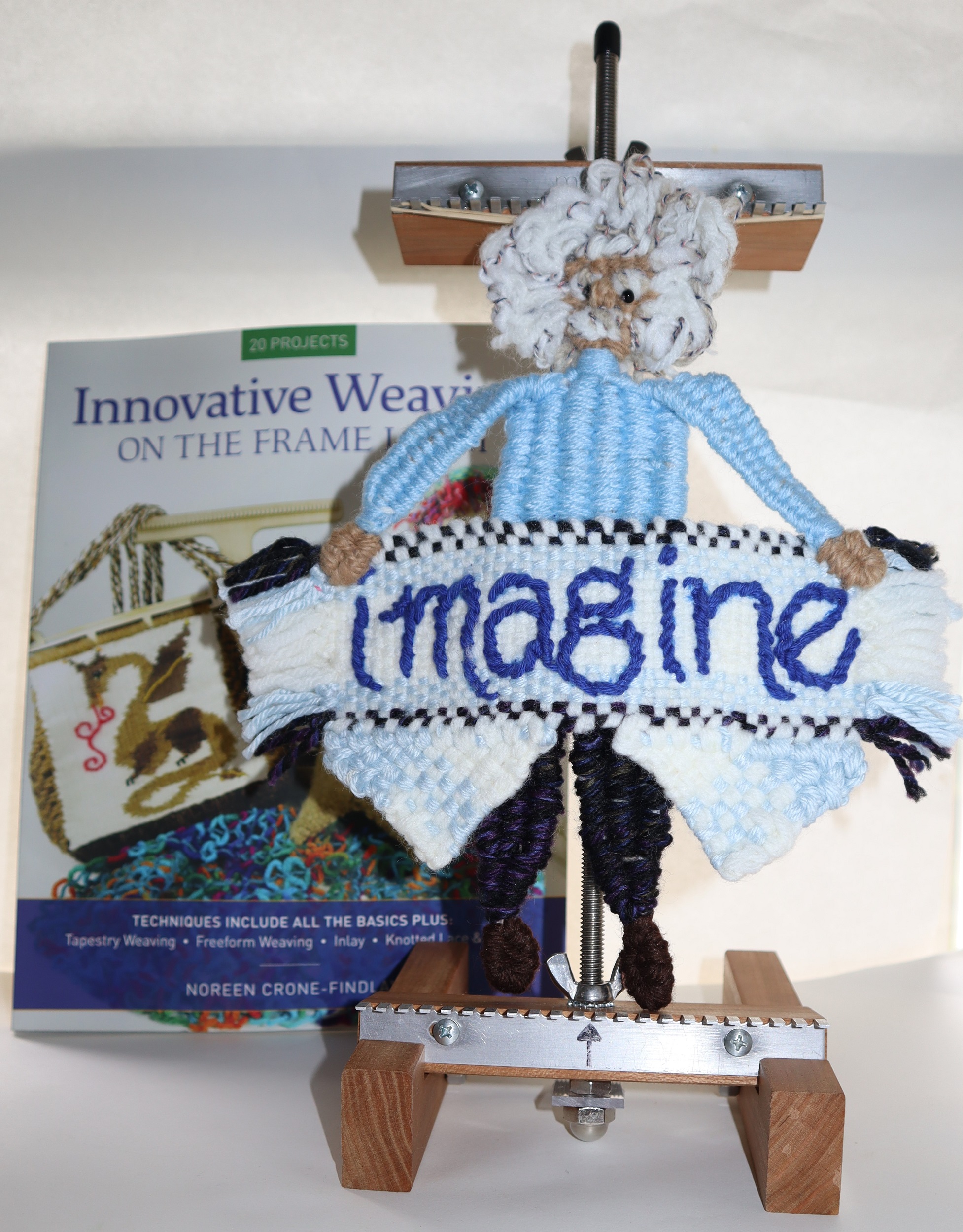
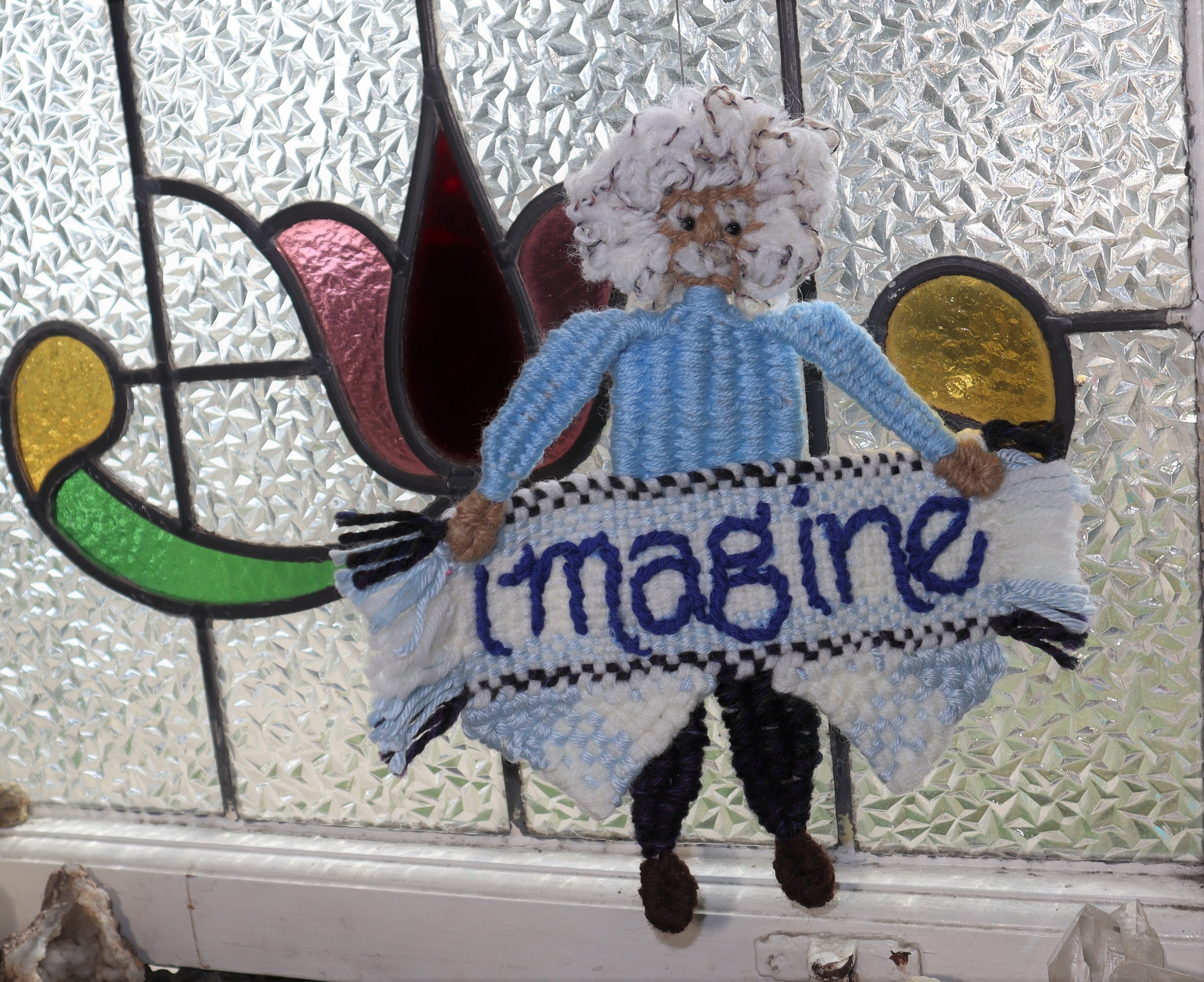
The “Imagine” banner is a reminder about the power of creativity. Noreen Crone-Findlay, author of “Innovative Weaving on the Frame Loom”, has designed this banner as a weave along, featuring the delightful Mirrix Saffron Loom.
Albert Einstein has been credited with saying that he valued imagination over knowledge.
Now is certainly the time for us all to imagine that we can make things better, so hurrah for creativity, resiliency and imagination!
The 3 components of the ‘Imagine’ banner are all based on techniques that are featured in ‘Innovative Weaving on the Frame Loom’, with little tweaks so that you can make a unique and one of a kind celebration of creativity to inspire yourself and other people, too.
You will need the Mirrix Saffron Loom and ‘Innovative Weaving on the Frame Loom’ by Noreen Crone-Findlay (that’s me, of course) to participate in the weave along.
Mirrix is offering a kit that includes both, as well as other tools that are used to create the ‘Imagine’ banner.
Last week I enjoyed a wonderful weave along and slide show workshop on the zoom platform from the Sustaining Scandinavian Folk Arts department at the University of Wisconsin.
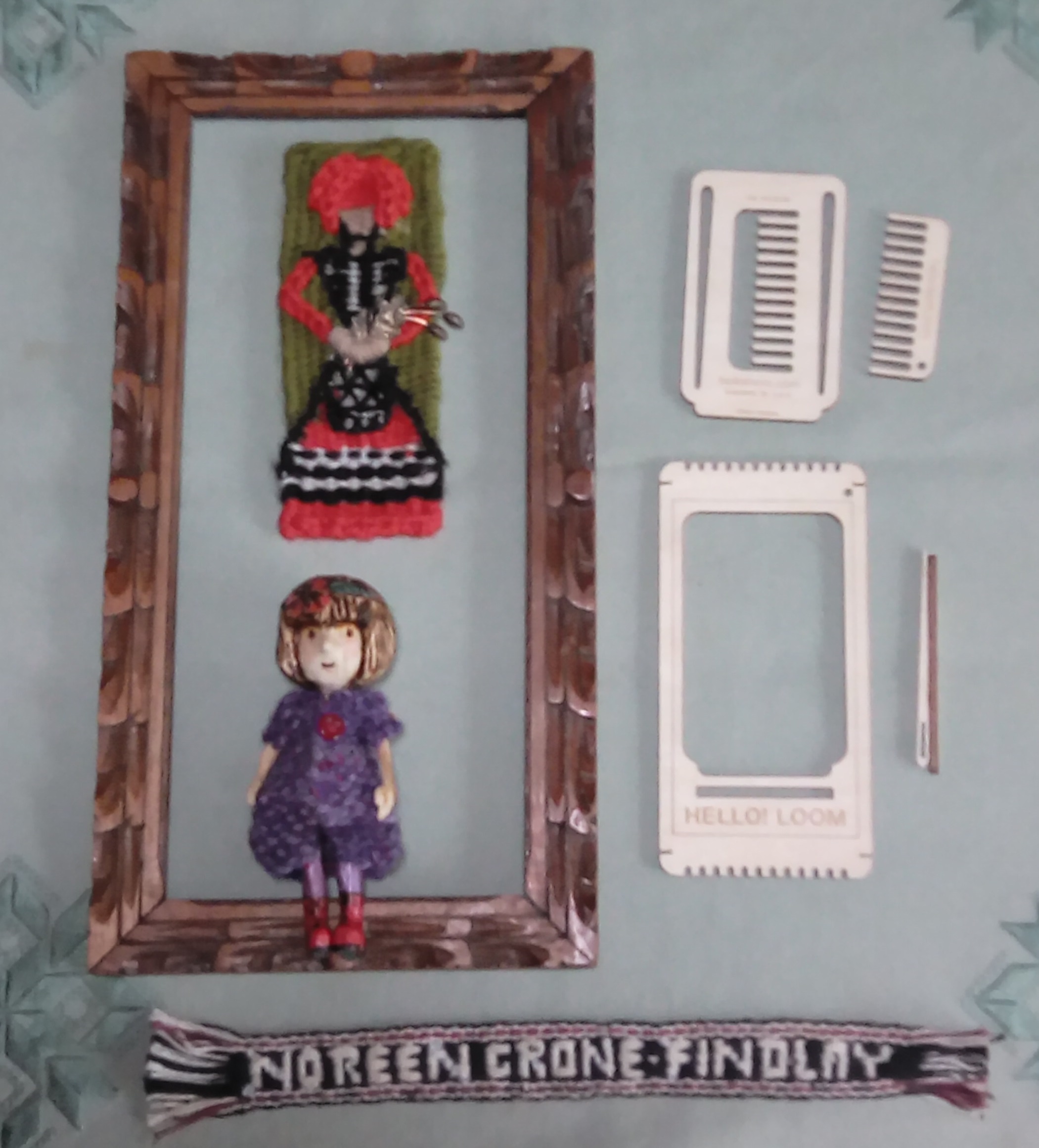
When mine arrived in the mail, the first thing I did was to weave a little dress for tiny Willow, a doll that I carved a few months ago.
I started weaving the lady with flowers tapestry during the presentation as Laura demonstrated common motifs used in Scandinavian weaving. I finished the tiny tapestry the next day.
It was a lovely event and my thanks to all the people who worked so hard to make it happen!
Here’s a link to the workshop:
Center for the Study of Upper Midwestern Cultures (CSUMC) YouTube channel:
After I carved and wove 3 dolls that didn’t fit the doll furniture that I already had, (see Brown Paper Yarn Dolls) ,
I decided that I had to build them each a chair.
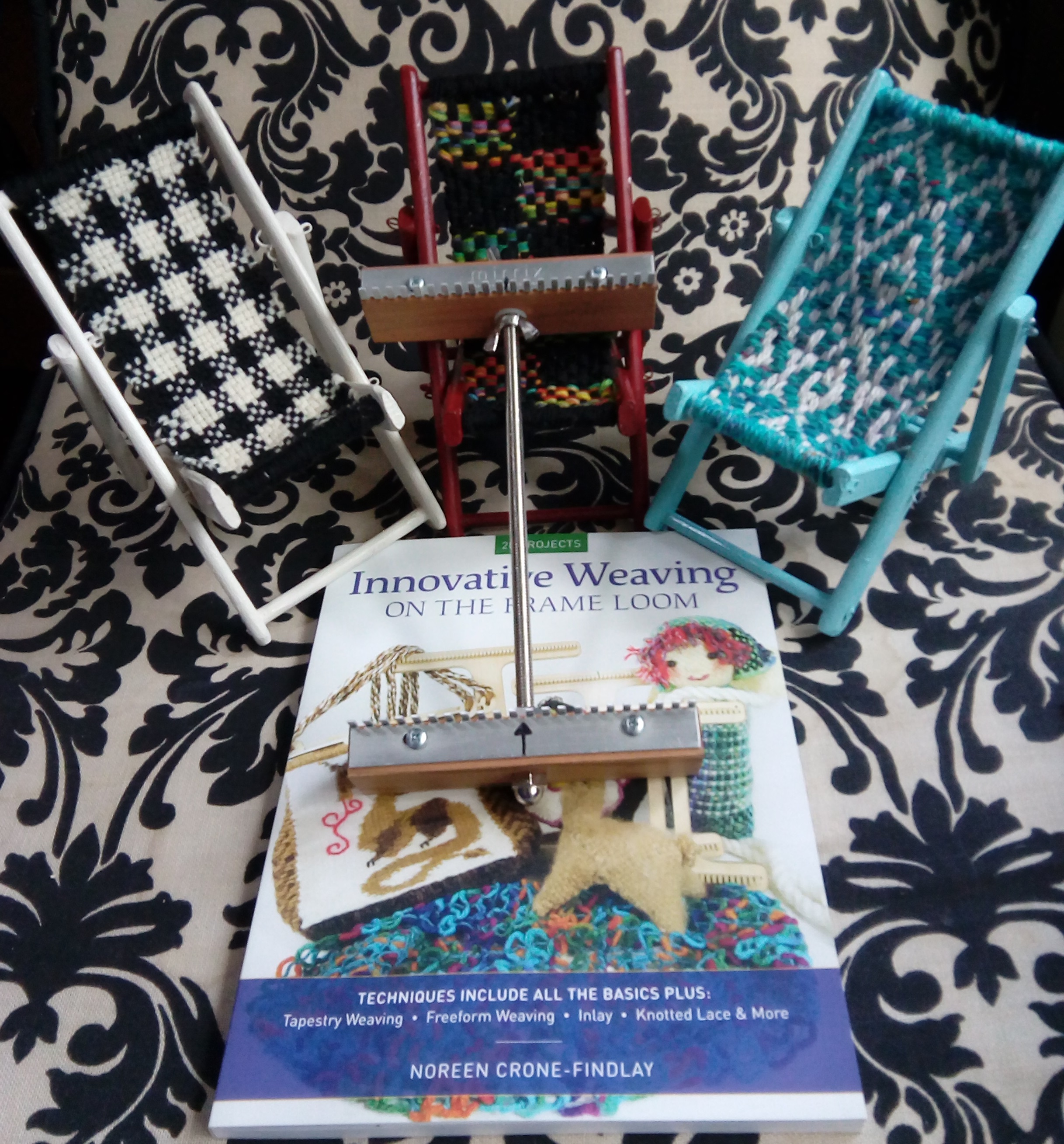
And so I built them each their own little chair with a seat woven on the Mirrix Saffron Loom, using instructions from my book: Innovative Weaving on the Frame Loom.
The Chairs are not in the book, but the weaving patterns are. See pages: 68, 50 and 45.
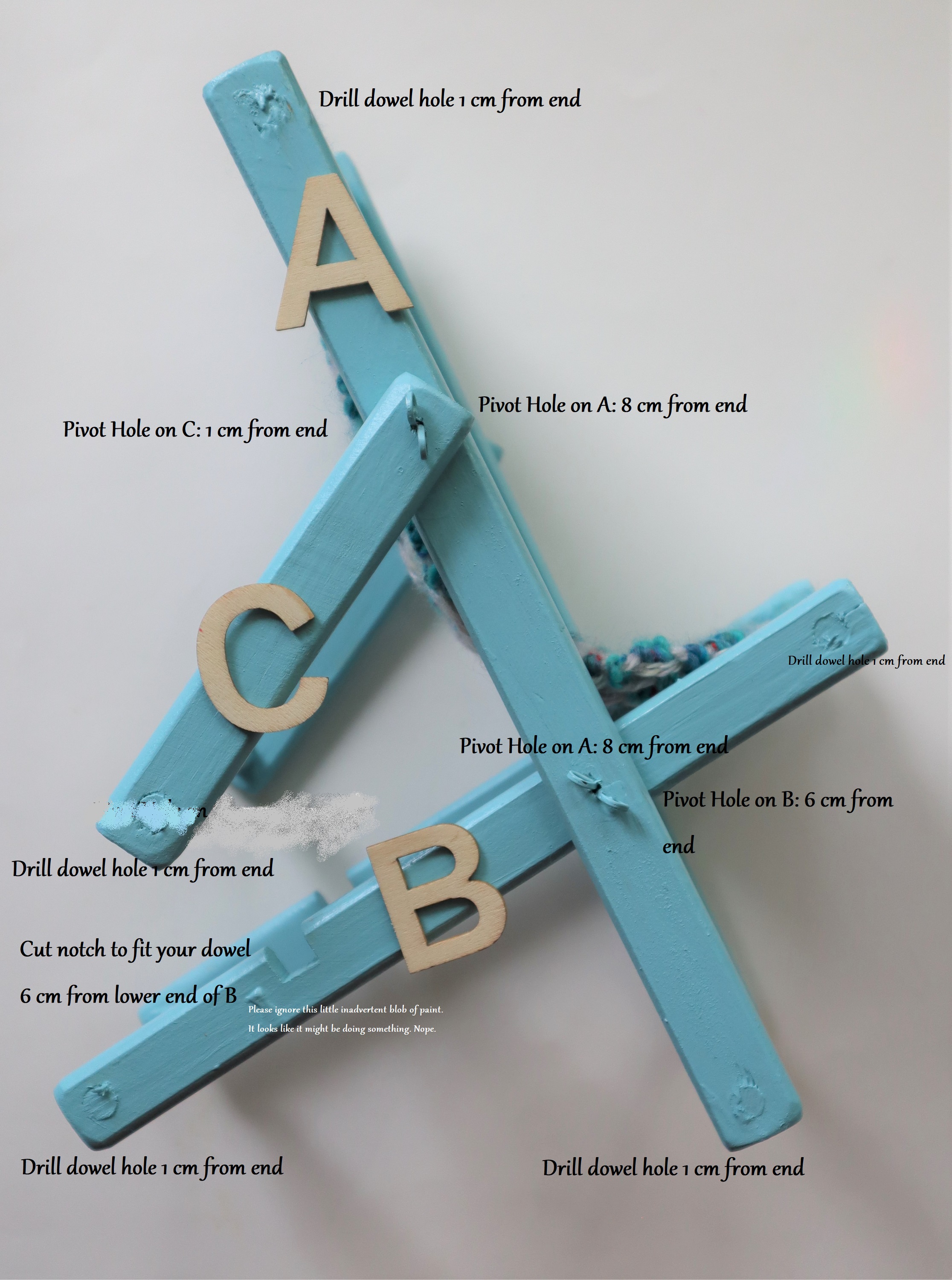
Here are the dimensions for the wooden parts of the chair:
The wooden pieces are all 1 cm thick and 2 cm wide.
Pieces A are 24 cm long (cut 2)
Pieces B are 20 cm long (cut 2)
Pieces C are 11 cm long (cut 2)
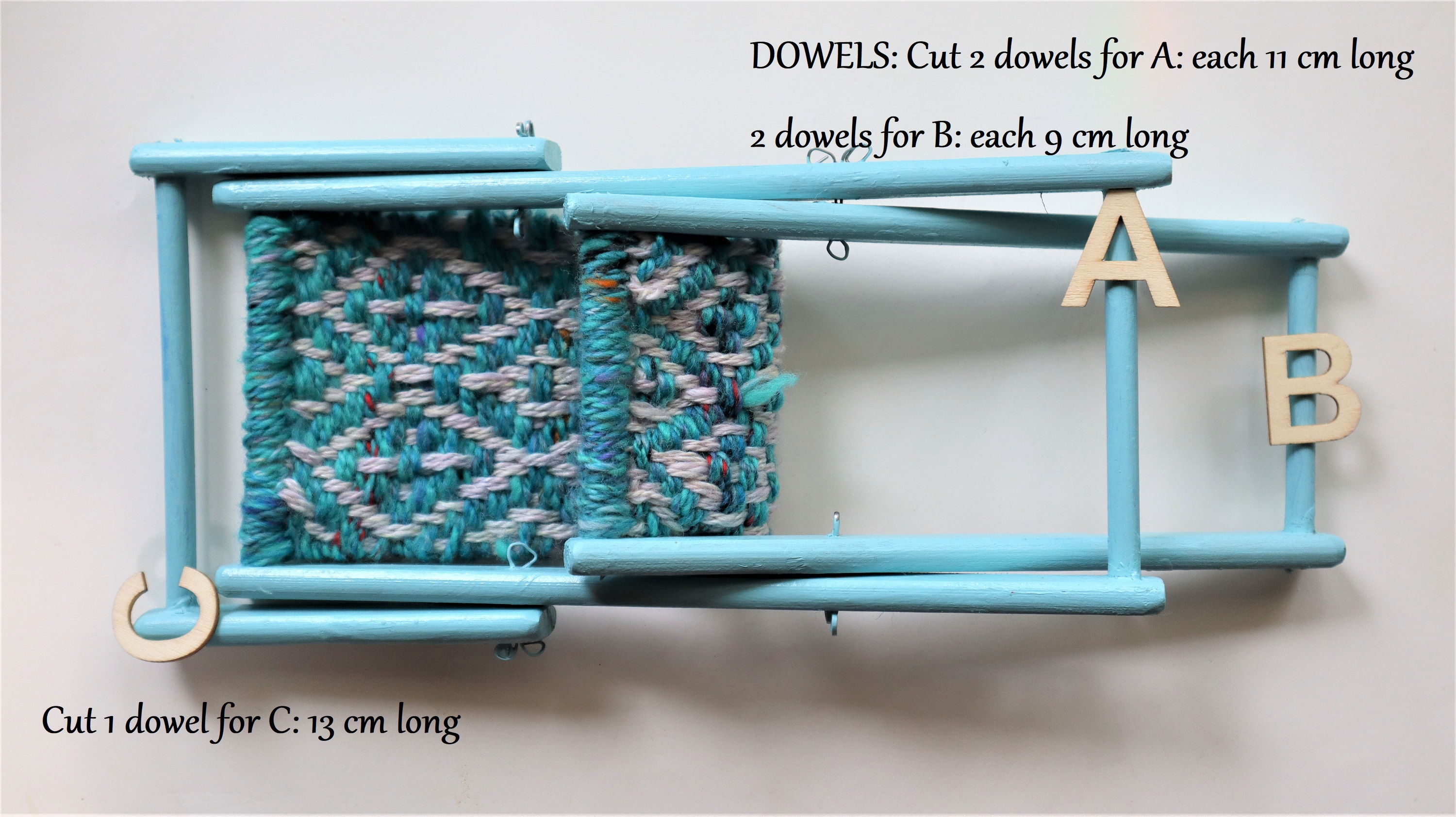
The Dowels are 1/4 inch in diameter:
A: Cut 2 that are 11 cm long
B: Cut 2 that are 9 cm long
C: Cut 1 that is 13 cm long
The Seat: Weave a piece of fabric that is 20 cm long by 7 cm wide and stitch through the end of the warp loops, over the top dowel of A and the front dowel of B.
The finished size of the chair is:
Height: 20 cm (8 inches)
From front to back: 18 cm (almost 7 inches)
Width: 13 cm at widest point (about 5 inches)
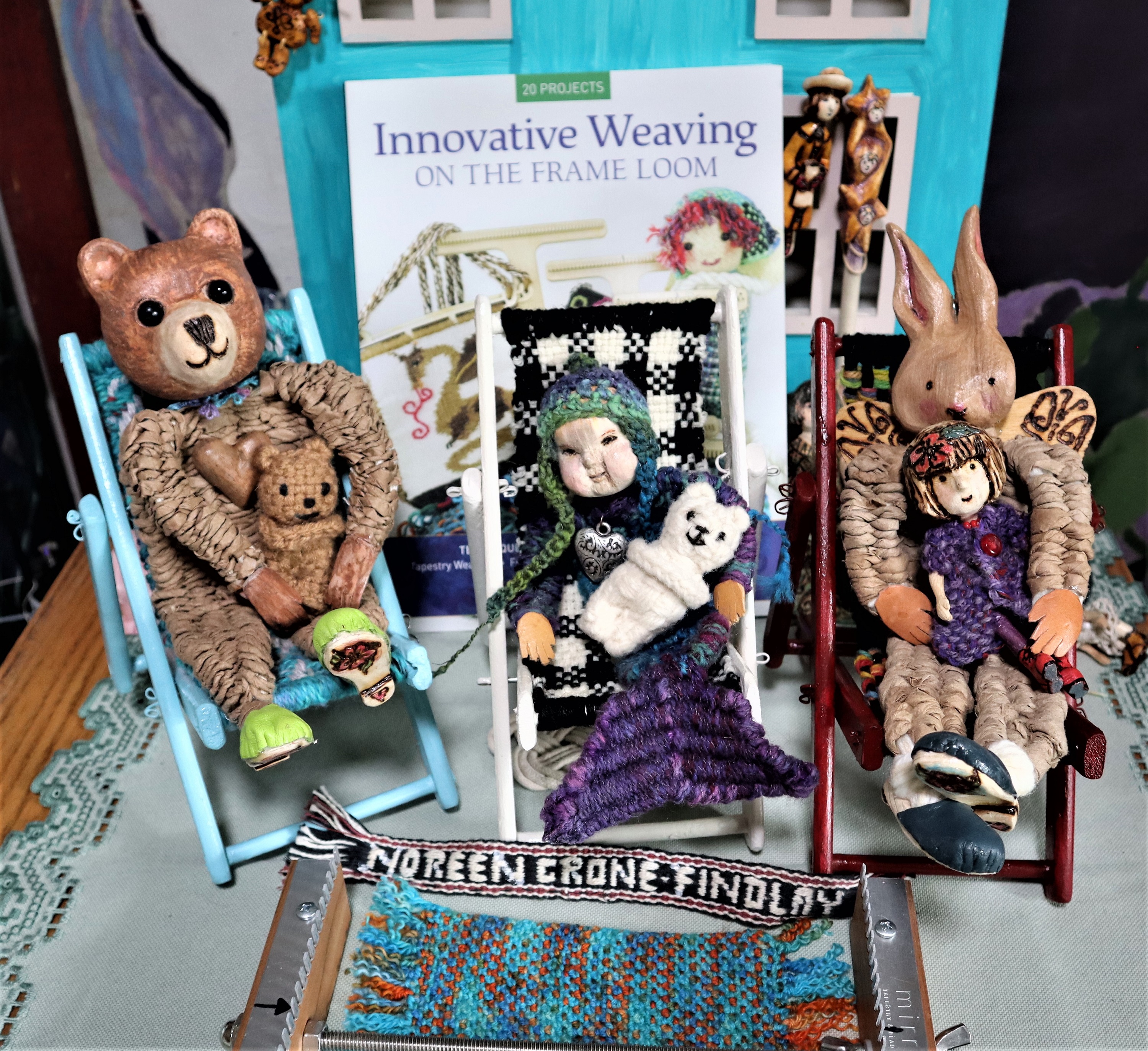
The dolls are very happy in their new chairs!
I have made a video, showing how to build the chairs- but please note that I forgot to show how I sew the weaving to the chair.
Oops.
I simply lifted the weaving off the loom and stitched through the warp loops with 2 strands of yarn, going over the dowel.
I hope that you will have fun making doll chairs for your dolls and teddy bears, too. ❤
One of my most favorite things to do at Christmas time is to make ‘the ornament of the year’ to give to family and friends. I usually end up making a LOT of them and it’s totally delightful.
This year, I have been weaving up a ton of tiny Snowmen- I designed them last year and made a video so other people can make them too.
One of my favorite projects in my new book, Innovative Frame Loom Weaving, is an extremely useful tool.
It’s a woven Needle Book that holds sewing needles.
Pin cushions are good for pins, but needles can get buried in them too easily.
Needle books hold sewing, darning and other craft needles safely and handily.
This video shows variations on the Needle book that I designed for the frame loom, including ones woven on the potholder loom and Weave It style pin loom.
And, also, a relative asked for a brooch that she could stick pins and needles in while mending, so there’s one of those in the video, too!










 Tottie Talks Crafts Blog