Sampling for a weaving project is a really good idea that most weavers often avoid doing.
But, weaving a small sample can give so much information to the weaver that it is a huge benefit.
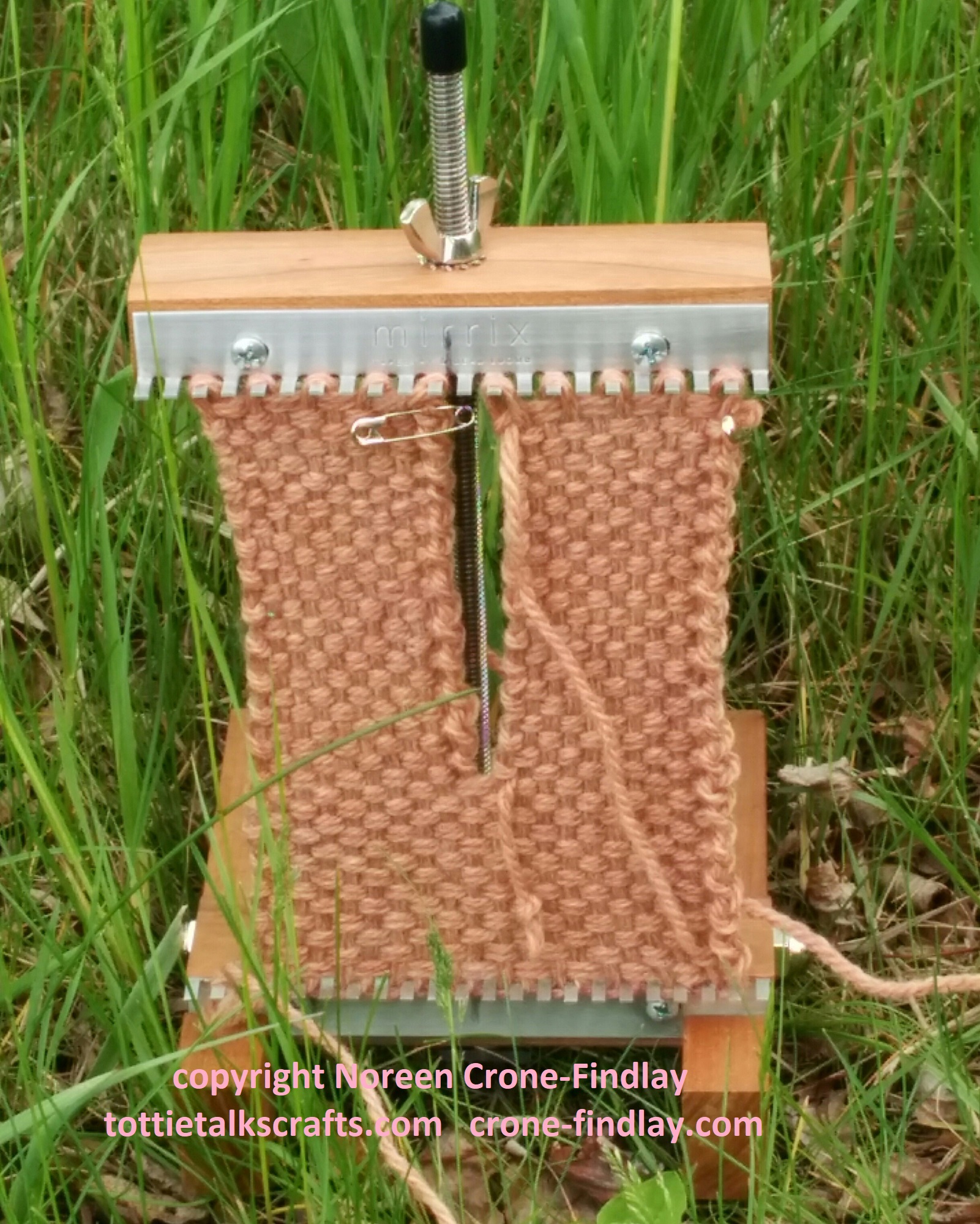
Weaving the arms for the Saffron Teddy Bears is a win/win in the sampling department 🙂
The arms are small, but will quickly show you if your yarn is going to make a pleasing fabric for your teddy bear.
If not, then it’s better to make adjustments and weave it over again, rather than committing to weaving the whole body and then finding that the yarn doesn’t work.
So, start your bear by weaving an arm first.
You’ll be glad you did!
The link for all the video tutorials for the Saffron Teddy Bears for the 2022 Summer Weaving Challenge is:
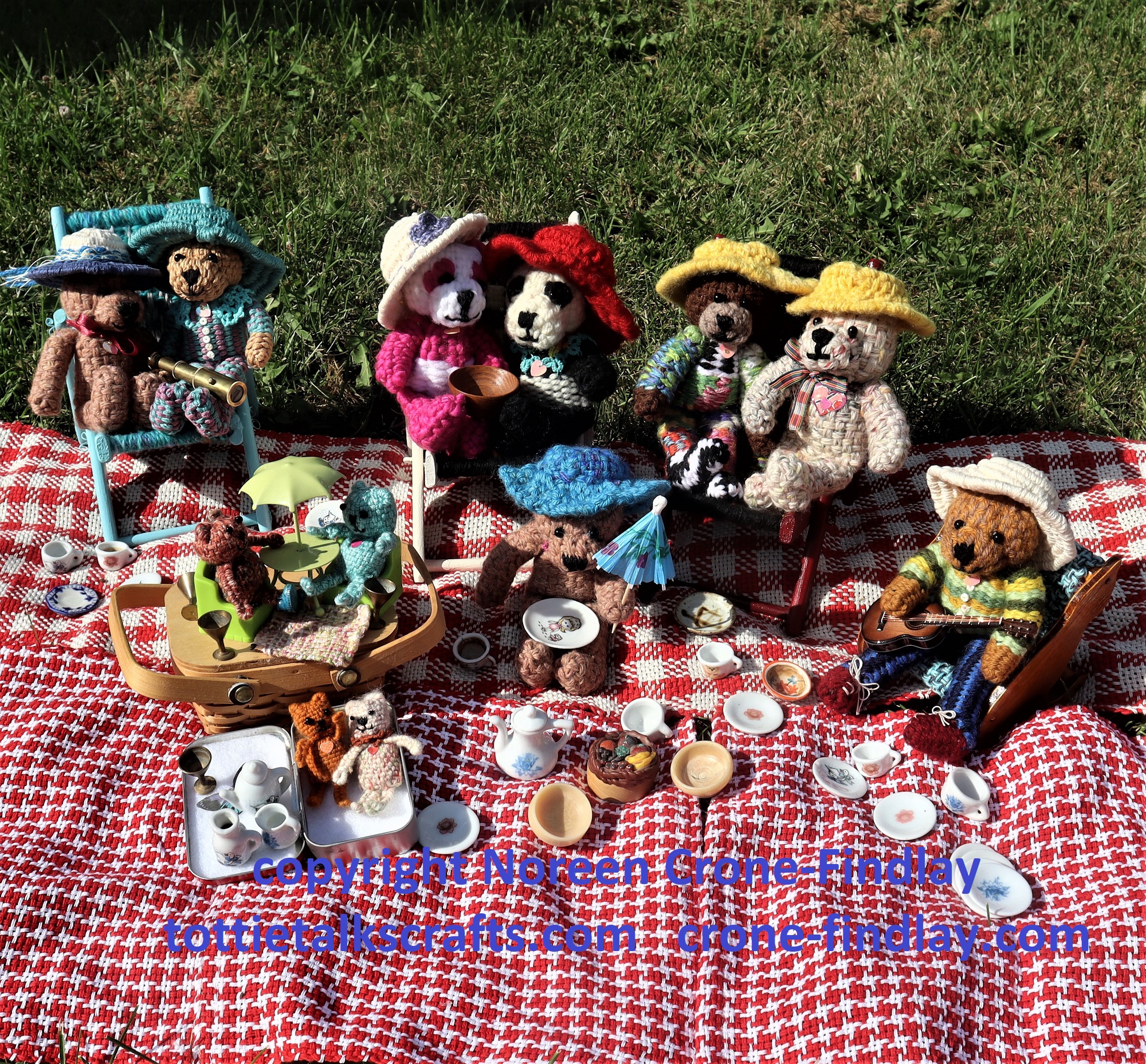
The Saffron Woven Teddy Bears invited some wooden teddy bears and tiny woven bears to have an adventure with them, and then to join them for a picnic.
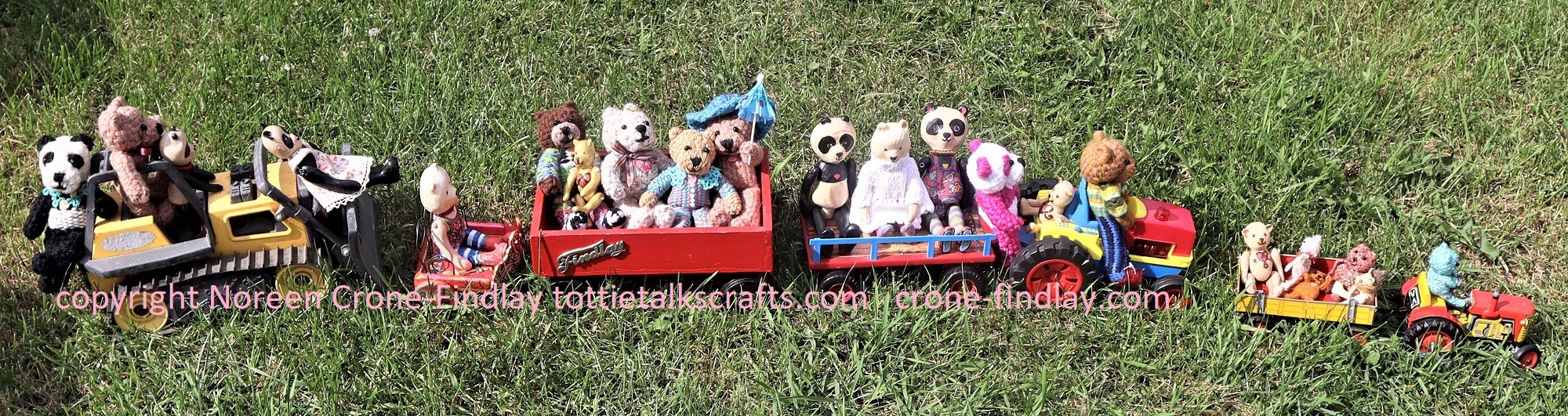
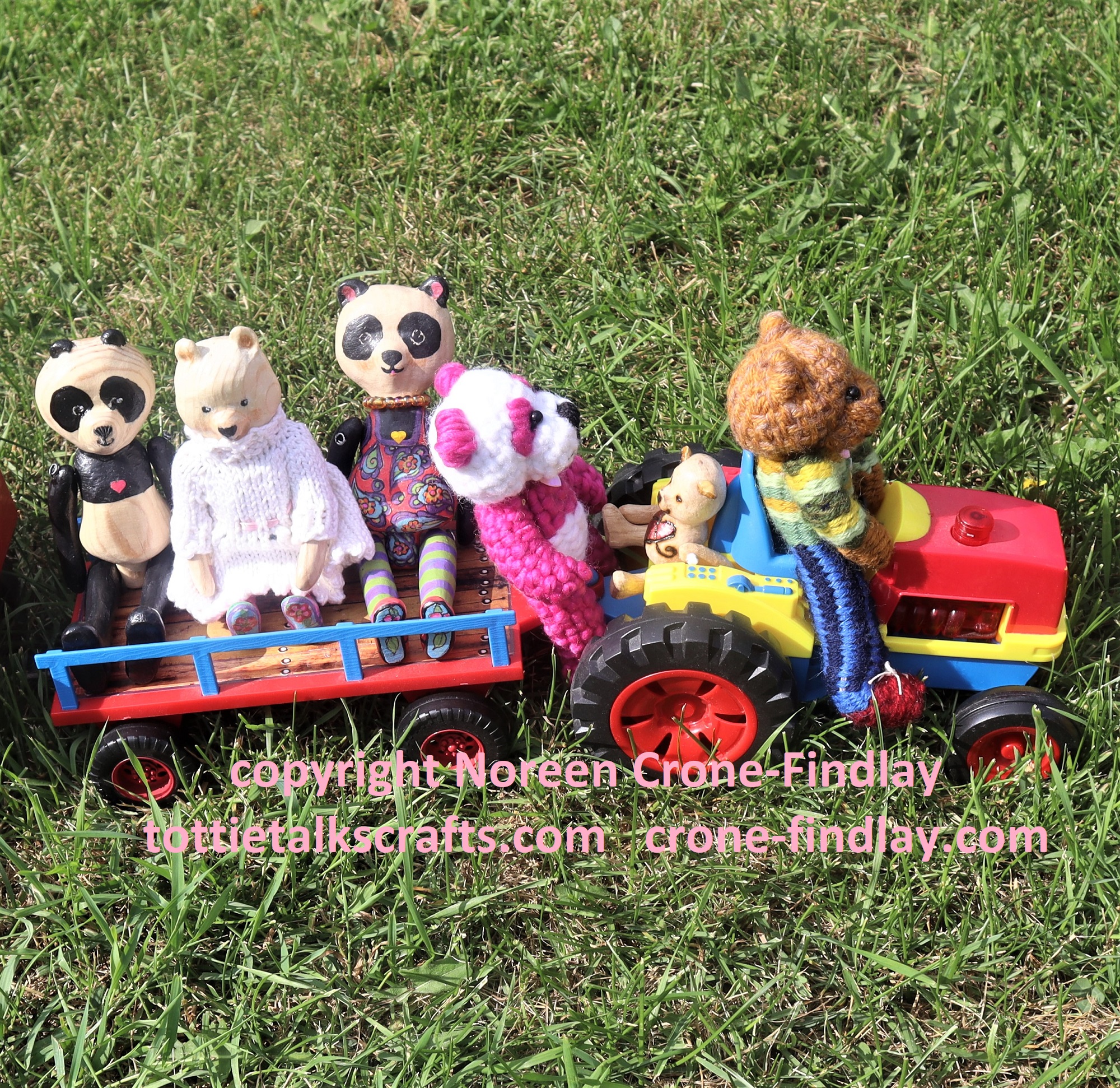
They climbed onto some tractors and into some wagons and even a bulldozer to ramble off to the picnic place.
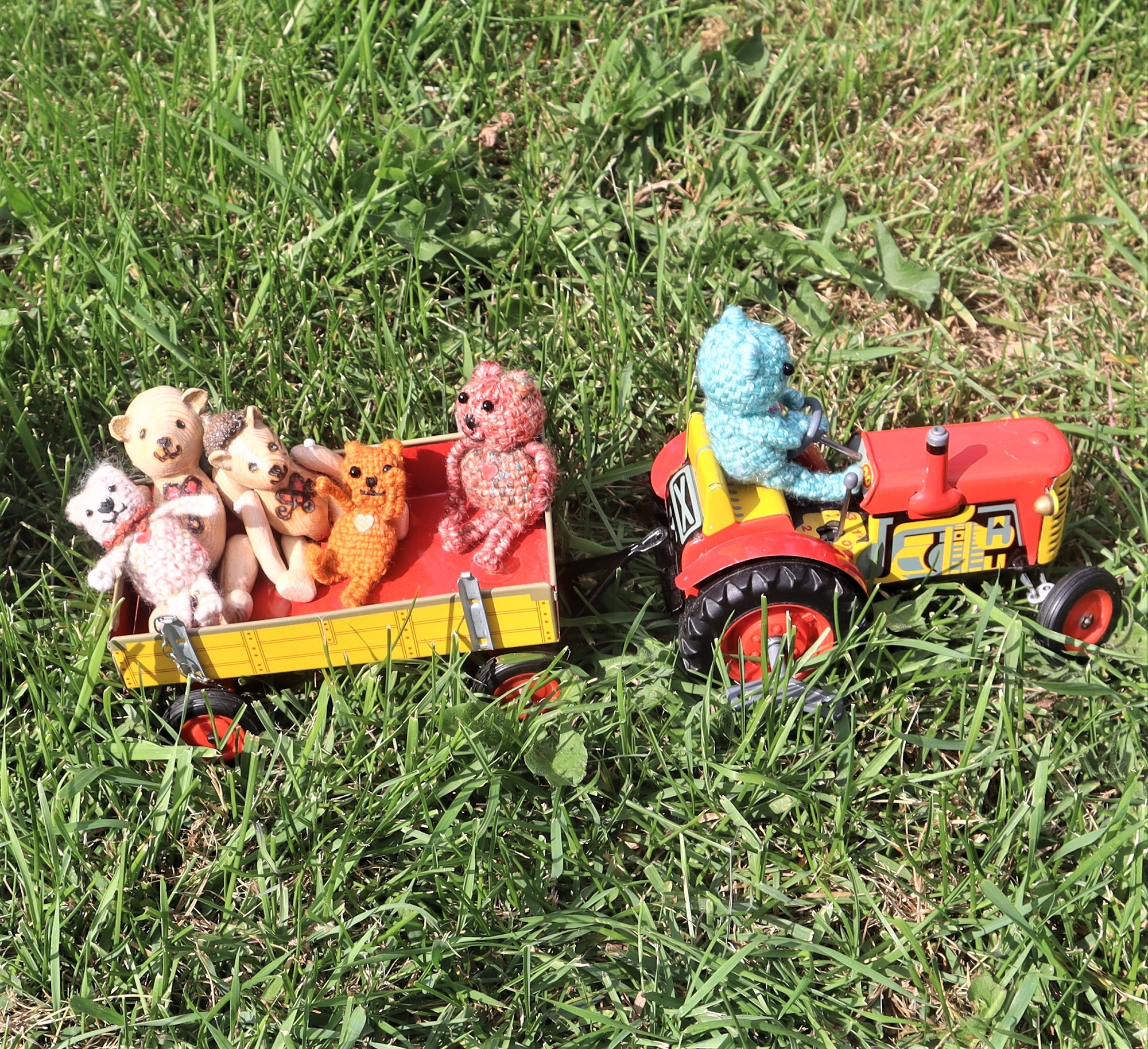
The tiny Blue Bear of Happiness was thrilled to drive the clockwork tractor, but found changing the gears was challenging and sent the passengers tumbling a few times.
They didn’t mind, in fact it was kind of fun.
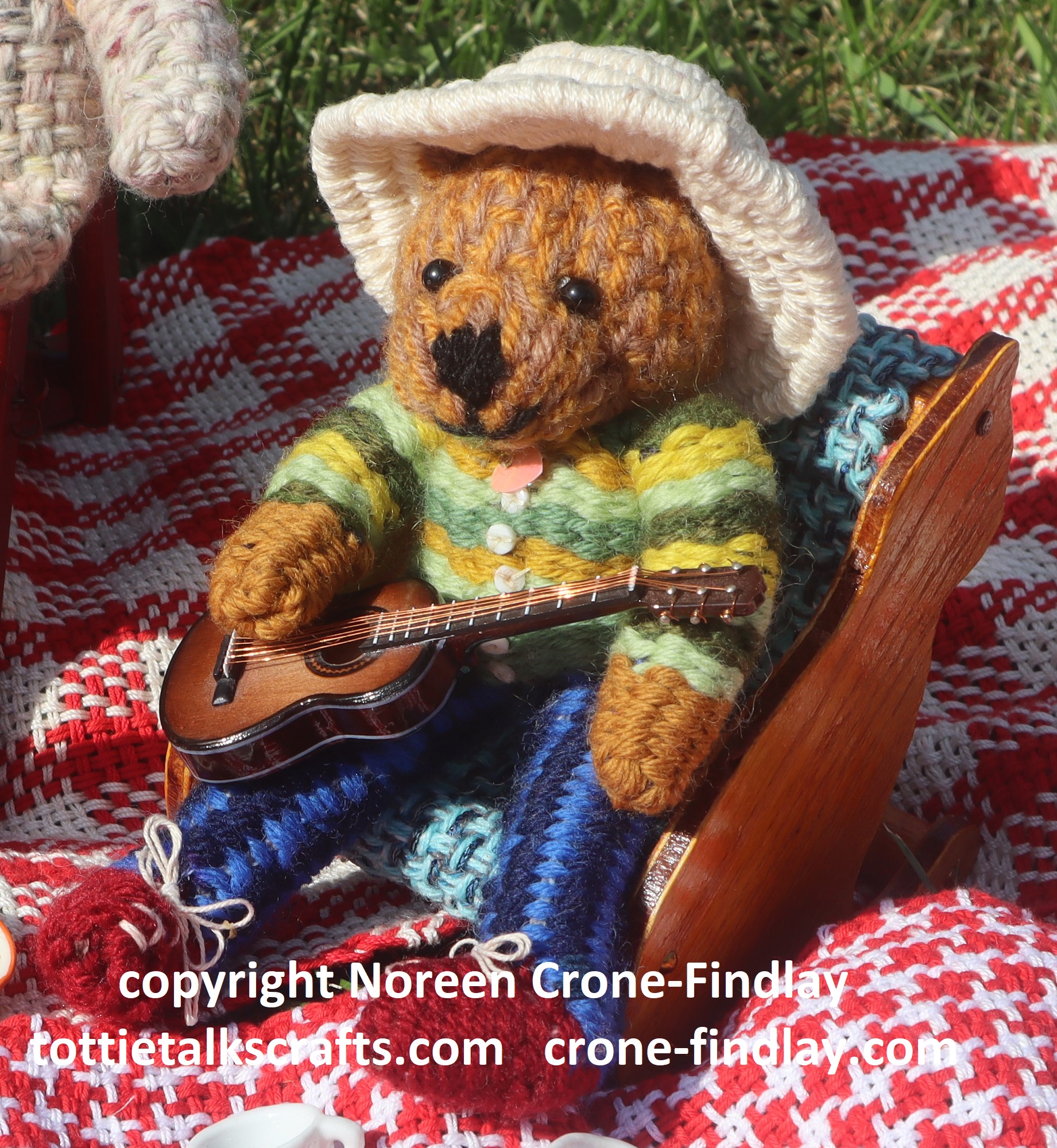
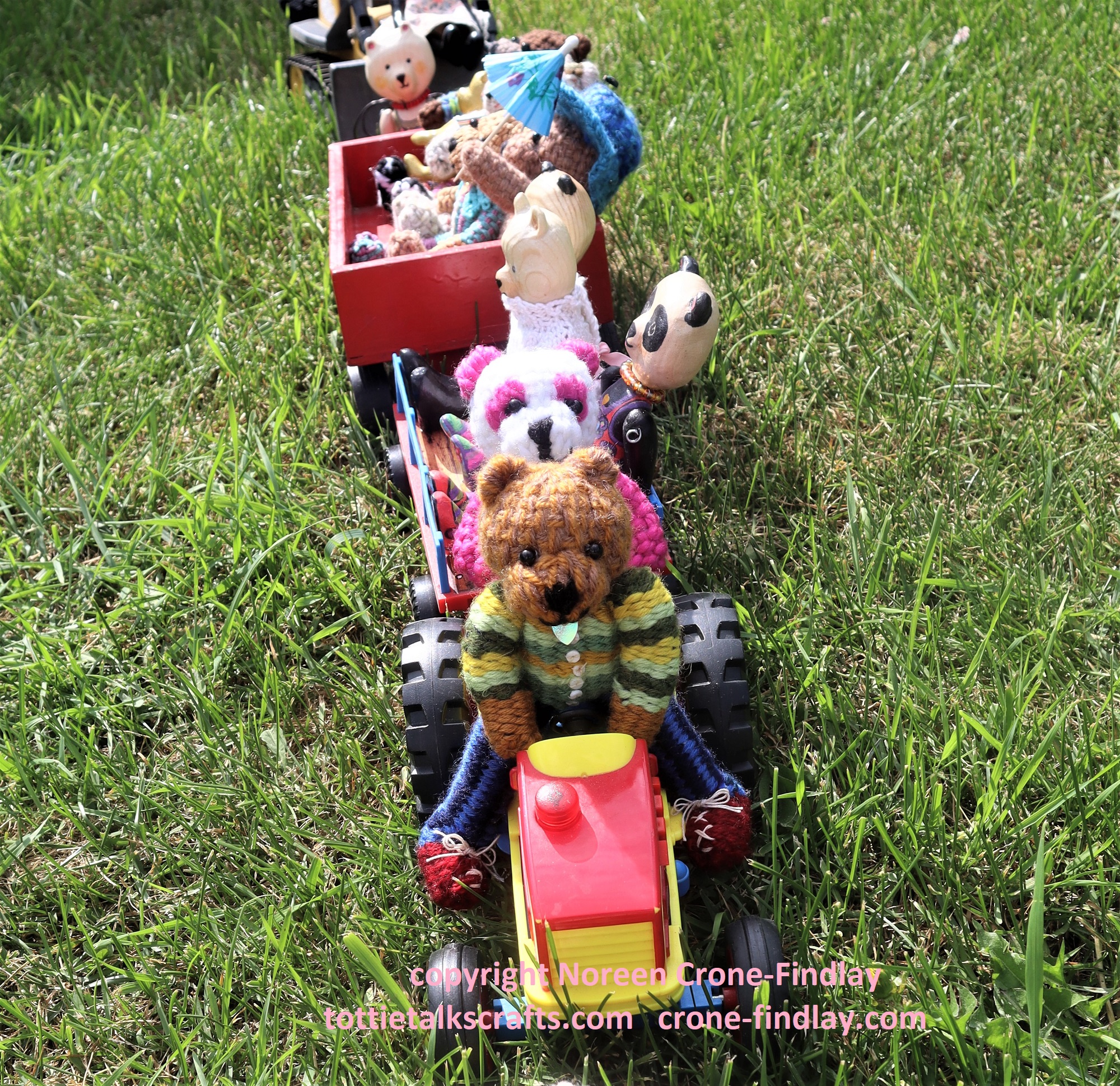
Jimmy Bear drove the larger tractor with style and his passengers enjoyed the ride in the various trailers, carts and chariots, but did find the heat to be rather intense. (It was blisteringly hot!)
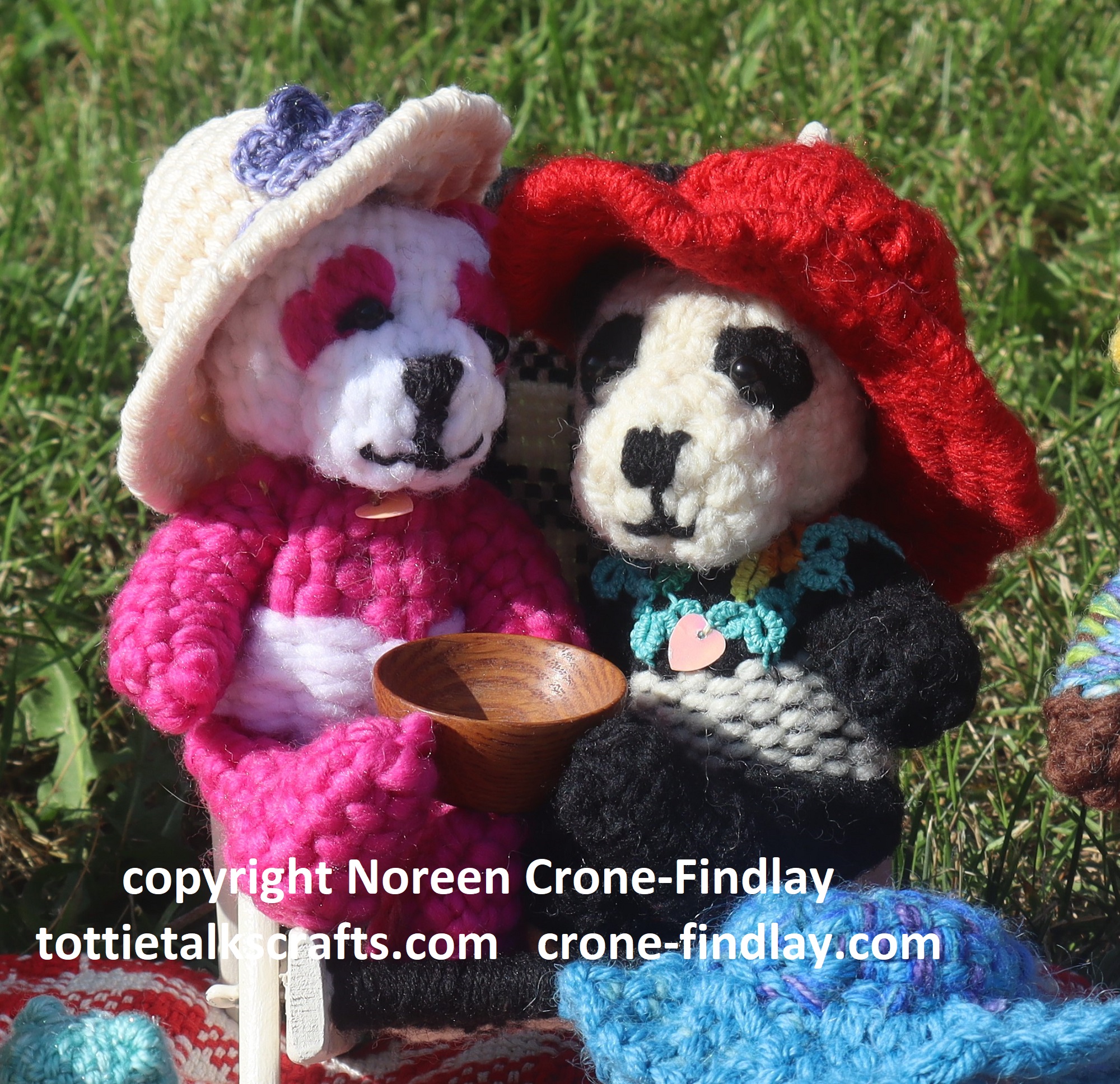
A bulldozer was the ride of choice for a few of the Pandas and their friend….
All the bears sang ‘The Teddy Bear’s Picnic’ at the top of their lungs.
Sadly, the carved wooden teddys found the heat to be un-bearable, so they scampered back into the studio and sat in front of the fan to cool off.
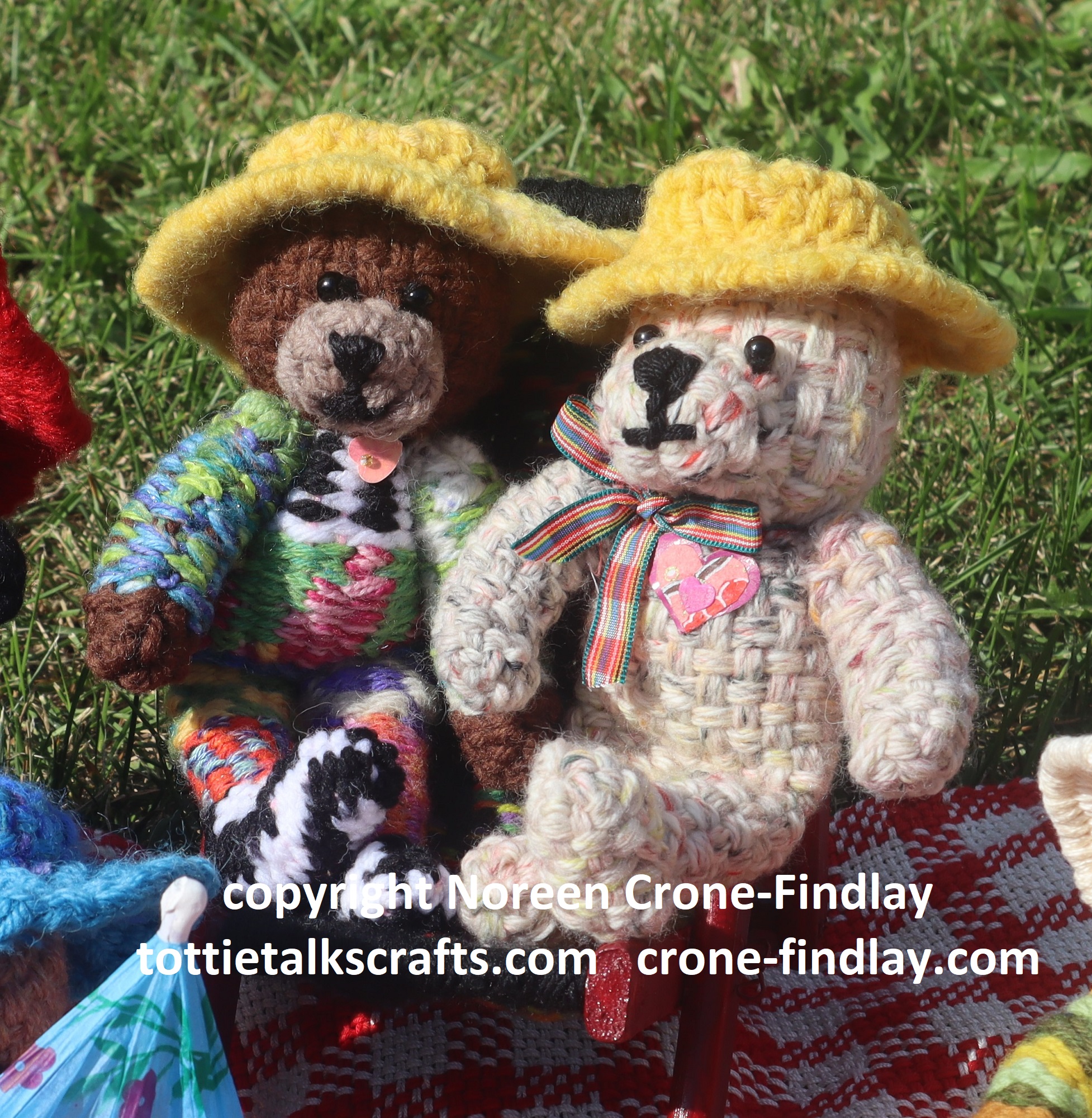
The woven Saffron Bears were perfectly happy in their sun hats, so the sun didn’t bother them.
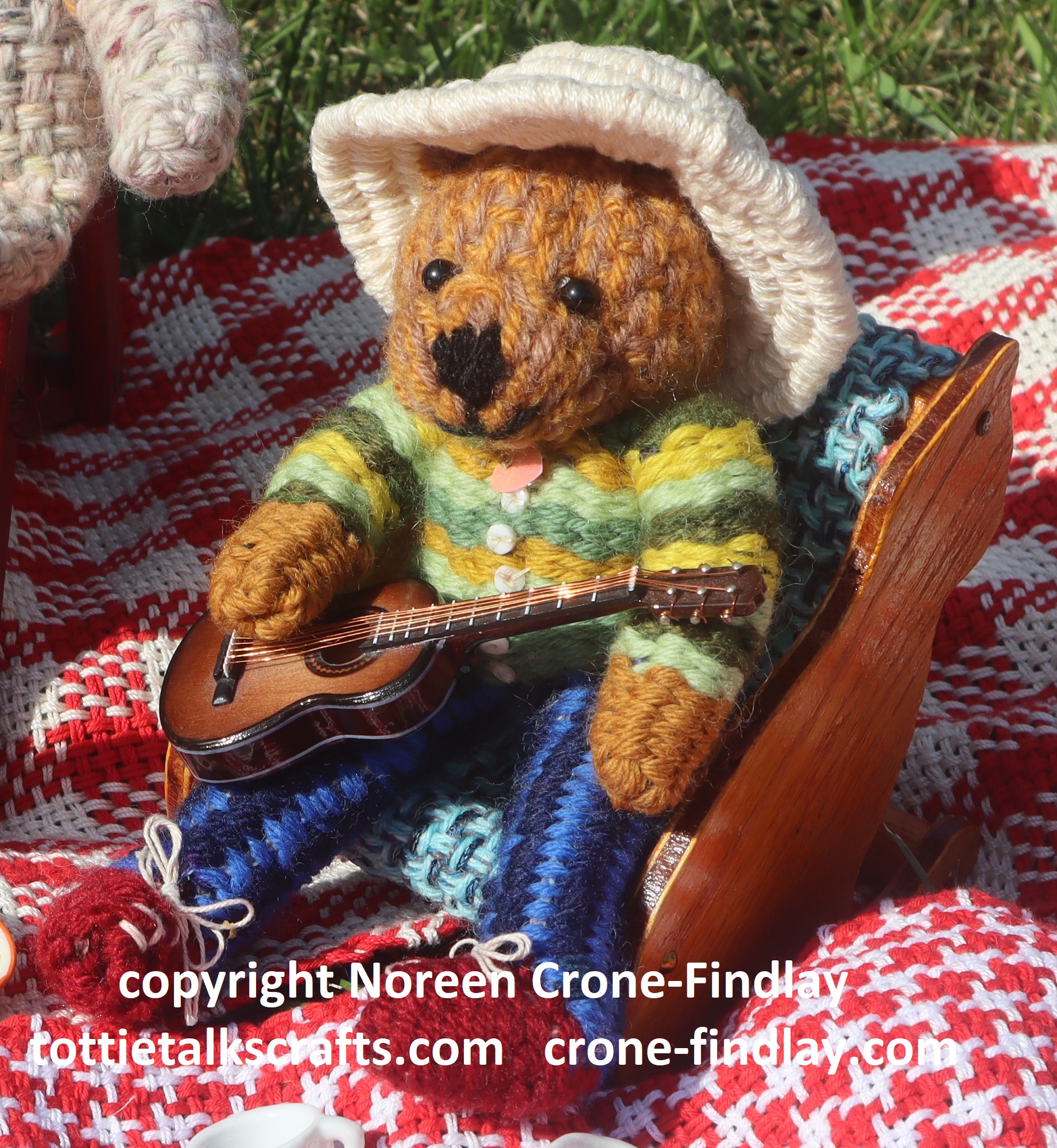
Jimmy Bear played his guitar and all the other bears loved it.
Two of the bears had brought along a telescope to watch birds, but were able to keep an eye on their carved wooden friends to make sure they made it safely back to the studio.
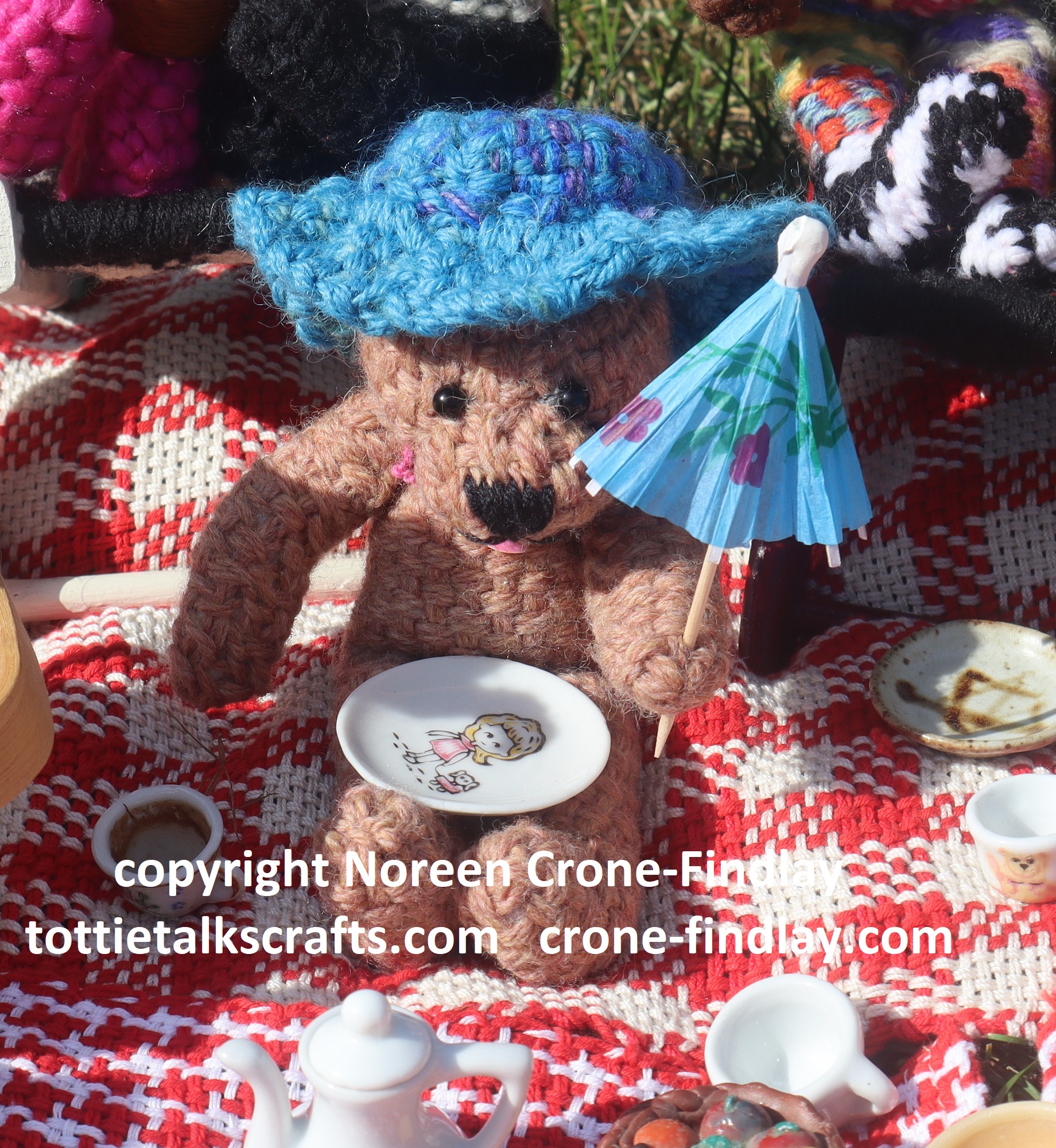
Only one of the bears had remembered to bring a parasol, but shared it when anyone need a little rest from the sun.
The pandas wondered if the grass might taste like bamboo, but the hot sun had dried it out so much that they decided to not sample it.
And two little bears leaned back in their folding chair and quietly dozed off right after this picture was taken.
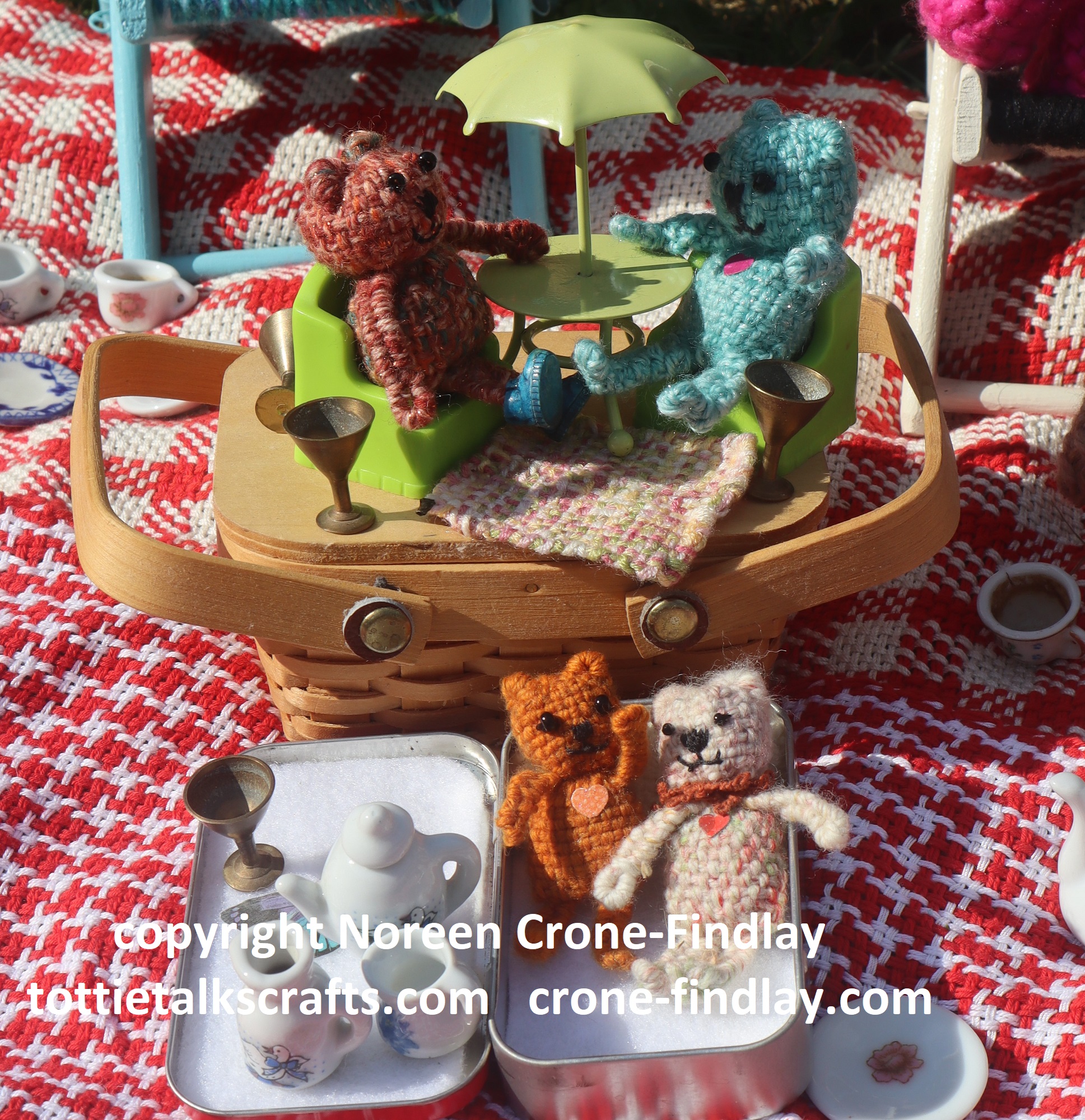
The tiniest bears were so glad that someone had remembered to bring their travelling bed along and after some giggling and wiggling, they fell asleep, too….
While the Blue Bear of Happiness and Wee Brown Bear enjoyed the shade of their umbrella.
All in all, it was a fine afternoon on an incredibly hot and sunny summer day.
I designed and wove all the Teddy Bears for the Mirrix Summer Weaving Challenge 2022.
The Saffron Bears were all woven on the Mirrix Saffron Loom. LINK
The tiny Bears were woven on the Baby Duo looms from Hello! Looms. LINK
All the ‘how to’ links to the videos for the step by step process of weaving all the looms are listed on
L I N K (Note: They will be added one by one through the week of August 8 to 15, 2022 and will remain available once they have been released, so there is no time limit on getting the weaving done.)
Happy Weaving! And, may the teddy bears bring you delight!
When I started designing the Teddy Bears to weave on the Saffron loom from Mirrix for the
2022 Summer Weaving Challenge, I had NO IDEA that I would go down such an amazing Rabbit Hole
There are so many ways to weave the Saffron Teddy Bear.
Even though the same basic ‘recipe’ is used to weave all the bodies, using different weaving techniques and different weights of yarns makes each of the Saffron Bears totally unique.
Here are some video tutorials showing how to weave the variations of the Saffron Bear’s Body:
The Basic Body:
The Black Panda Body:
The Pink Panda Body (How to Weave the Body with Super Bulky Yarns):
The Striped Body (Tapestry/Weft Face Technique):
Some Notes about Tapestry Weave for the Body:
See the Teddy Bear’s Picnic to see all the Bears having a wonderful day:
This post is where I’ll be putting all the links to all the ‘how to’ videos for the woven Teddy Bears that I have designed for the Mirrix Summer Weaving Challenge for the summer of 2022.
The videos will stay up as long as I have a YouTube channel.
For starters…..
Here’s the link to the Summer Weaving Challenge on the Mirrix website: LINK
If you don’t have my book, you can order it from Mirrix, and yup, you’ll want a Saffron loom, too (it’s one of my most favorite looms ever- so adaptable!). LINK
How to carve a weaving hook from a chopstick using a few simple tools: LINK
LINKS TO THE POSTS FOR ALL THE VIDEO TUTORIALS:
INTRODUCTION: The Teddy Bears have a Parade and a Picnic: LINK
1- What is needed for weaving the Saffron Bears LINK
2- Saffron Teddy Bears- How to weave the Arms LINK
3- Saffron Teddy Bears- How to weave the Teddy Bear Body, with lots of variations LINK
4- Saffron Teddy Bears- How to weave the Teddy Bear Head and Nose LINK
5- Saffron Teddy Bears- How to Assemble the Teddy Bears LINK
6- Saffron Teddy Bears- How to Weave Sun Hats for the Teddy Bears LINK
7- Tiny Teddy Bears woven on the Baby Duo Looms from Hello! Looms LINK
I have been weaving up a delightful basket of bears for the week of Aug 8- 14, 2022.
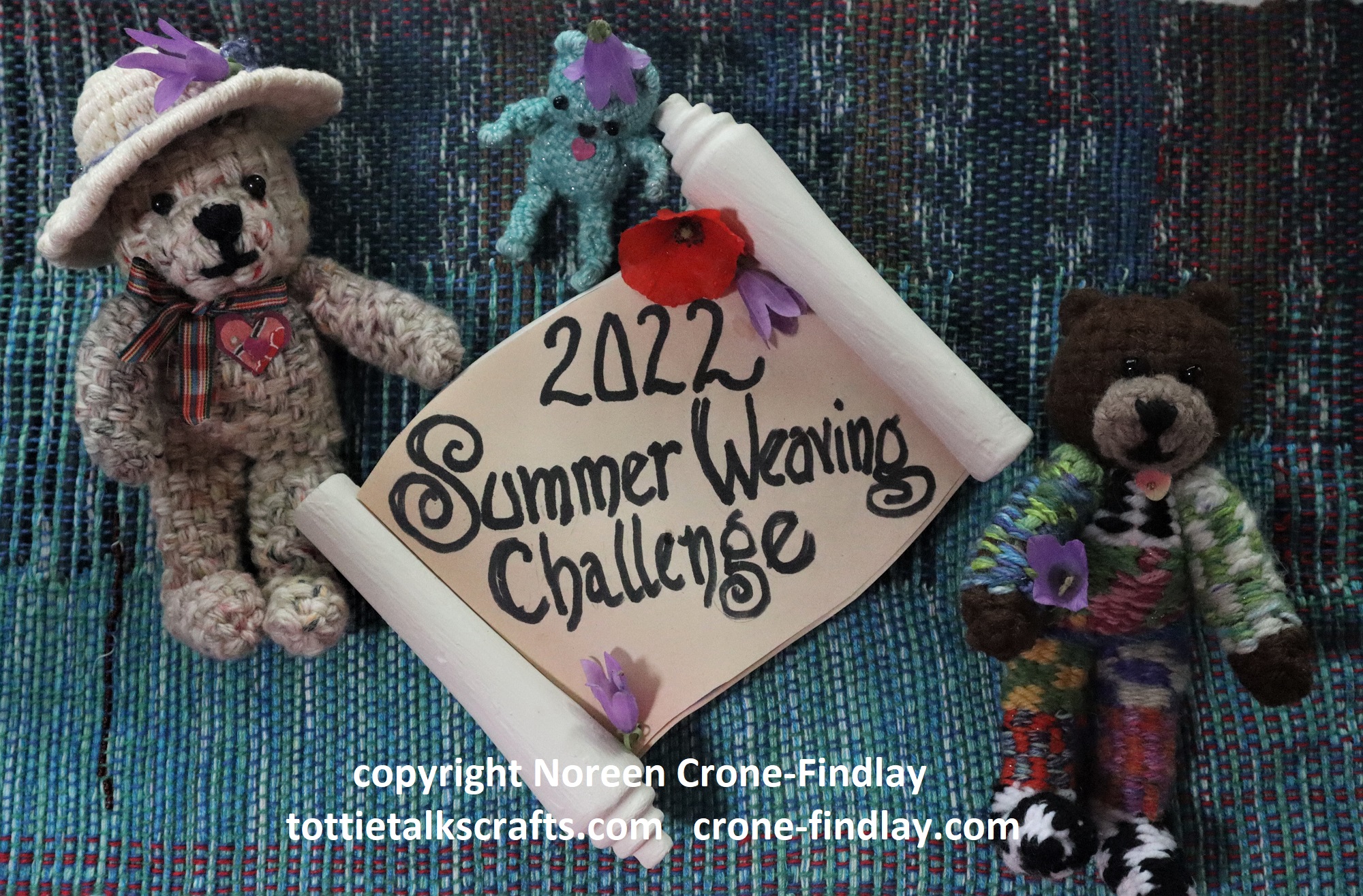
That’s the week that I will be leading the Summer Weaving Challenge that is hosted by Mirrix looms.
The Teddy Bears will be revealed in their full adorableness and by then, I will have finished editing the heap of ‘how to’ videos that I have been obsessively filming about the making of the teddy bears.
The Teddy Bears will be having a wonderful picnic, and I will show how each of them (and those that are still in the works) are in fact, samplers of techniques in my book: Innovative Weaving on the Frame Loom.
I’ll be posting links for the videos for the Saffron Teddy Bears here LINK on my blog beginning Aug 2, 2022.
If you don’t have my book, you can order it from Mirrix, and yup, you’ll want a Saffron loom, too (it’s one of my most favorite looms ever- so adaptable!).
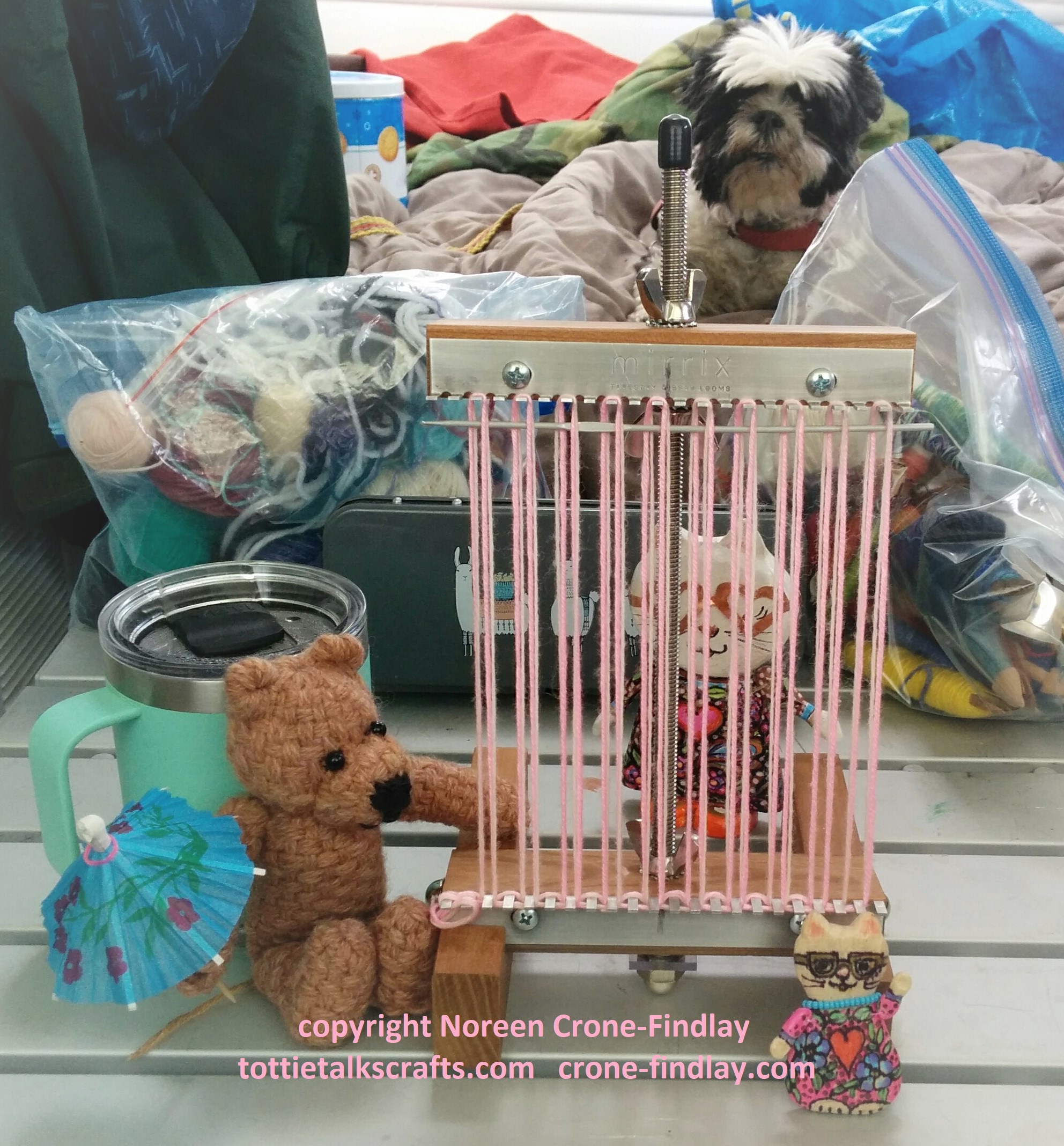
A couple of weeks ago, we went camping and my much loved little Mirrix Saffron loom came with us.
I was weaving away while we were camping (and I still am, but I have advanced to the video filming and editing stage) for the week that I will be leading the Summer Weaving Challenge (August 8 to 15, 2022).
Here’s the link to join in the fun (and you can buy my book: Innovative Weaving on the Frame Loom on the Mirrix website, too on the Starter Kit page 😊 or at any of the online book selling websites.










 Tottie Talks Crafts Blog